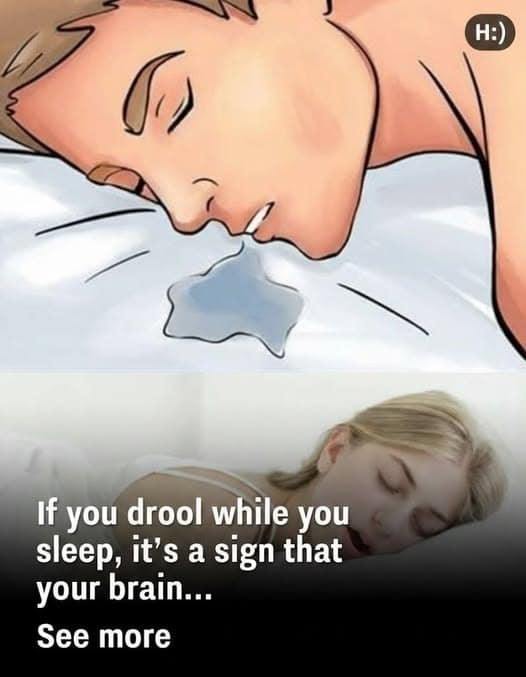
That viral line — “If you drool while you sleep, it’s a sign that your brain…” — is clickbait, not real medical science.
Here’s what’s actually going on 👇
🧠 Is drooling linked to your brain?
Not in the way those posts suggest.
Drooling during sleep (called sleep-related hypersalivation) is usually physical, not neurological.
😴 Common real reasons you drool in sleep
- Sleeping position (especially on your side or stomach)
- Deep sleep → your swallowing reflex relaxes
- Blocked nose (cold, allergies, sinus issues)
- Mouth breathing
- Excess saliva production
All of these are normal and harmless in most cases.
⚠️ When it might be a concern
Drooling can be linked to a medical issue only if it’s severe or unusual, such as:
- Difficulty swallowing
- Sudden onset with other symptoms
- Neurological conditions like Parkinson’s disease or stroke
But this is rare and usually comes with obvious additional symptoms—not just drooling alone.
❌ Why viral posts say this
They often claim things like:
- “Your brain is relaxed”
- “You’re in deep sleep genius mode”
- “It means high intelligence”
👉 These are made-up interpretations designed to grab attention.
✅ Bottom line
- Drooling while sleeping is common and usually harmless
- It’s mostly about sleep position and breathing, not your brain
- Only worry if it’s new, excessive, or paired with other symptoms
If you want, I can help you figure out why you personally might be drooling at night and how to reduce it.
