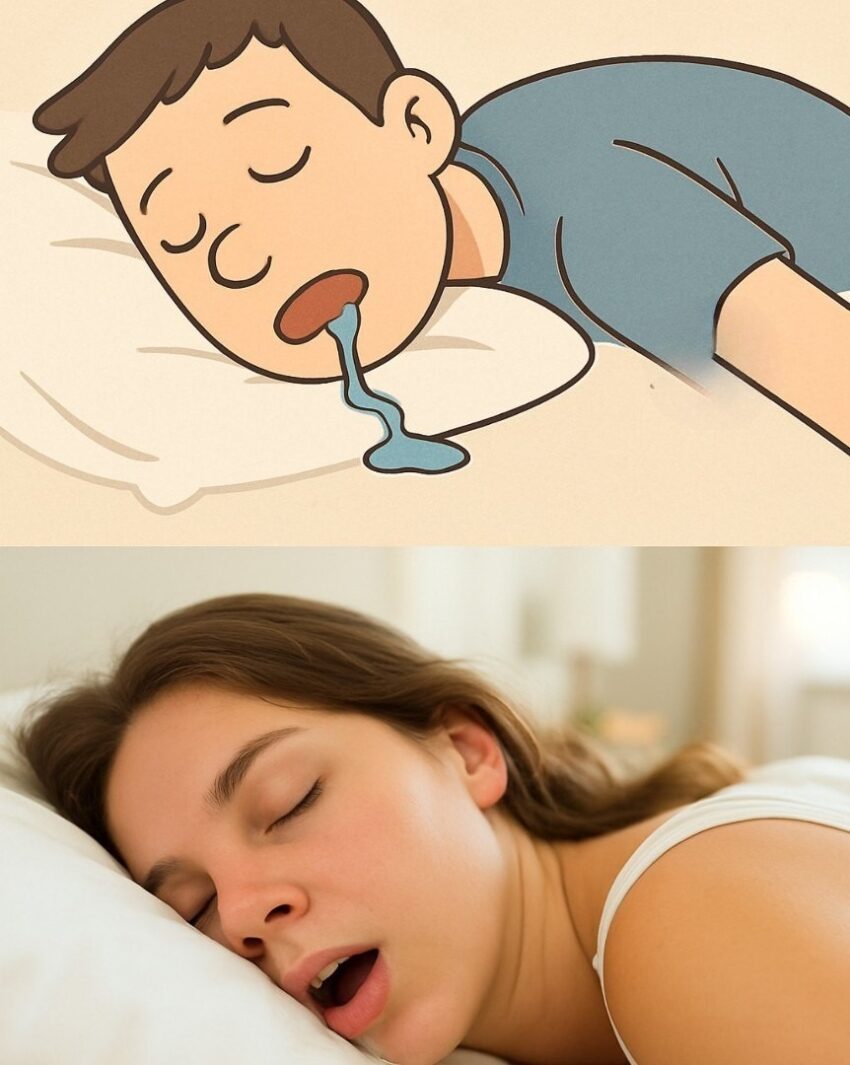
That “If you drool while you sleep, it’s a sign that your brain…” line is another clickbait fragment. The implied claim is usually something like “brain damage,” “low intelligence,” or “serious neurological disease.” In most cases, that is not true.
What drooling during sleep actually means
Drooling (saliva leaking from the mouth while sleeping) is usually normal and related to simple physical factors:
- Sleep position: Sleeping on your side or stomach lets saliva escape instead of being swallowed.
- Relaxed muscles in deep sleep: Your jaw muscles relax, and swallowing decreases.
- Nasal congestion: If your nose is blocked (cold, allergies), you breathe through your mouth more.
- Excess saliva production: Sometimes caused by acid reflux or certain foods.
When it might be worth checking
In rare cases, frequent or severe drooling could be linked to:
- Sleep apnea (especially with loud snoring or choking at night)
- Neurological conditions (usually with other symptoms, not drooling alone)
- Acid reflux
Key point
For most people, drooling during sleep is completely harmless and common, and it does not indicate brain damage or intelligence level.
If you want, I can also tell you simple ways to reduce drooling at night.
