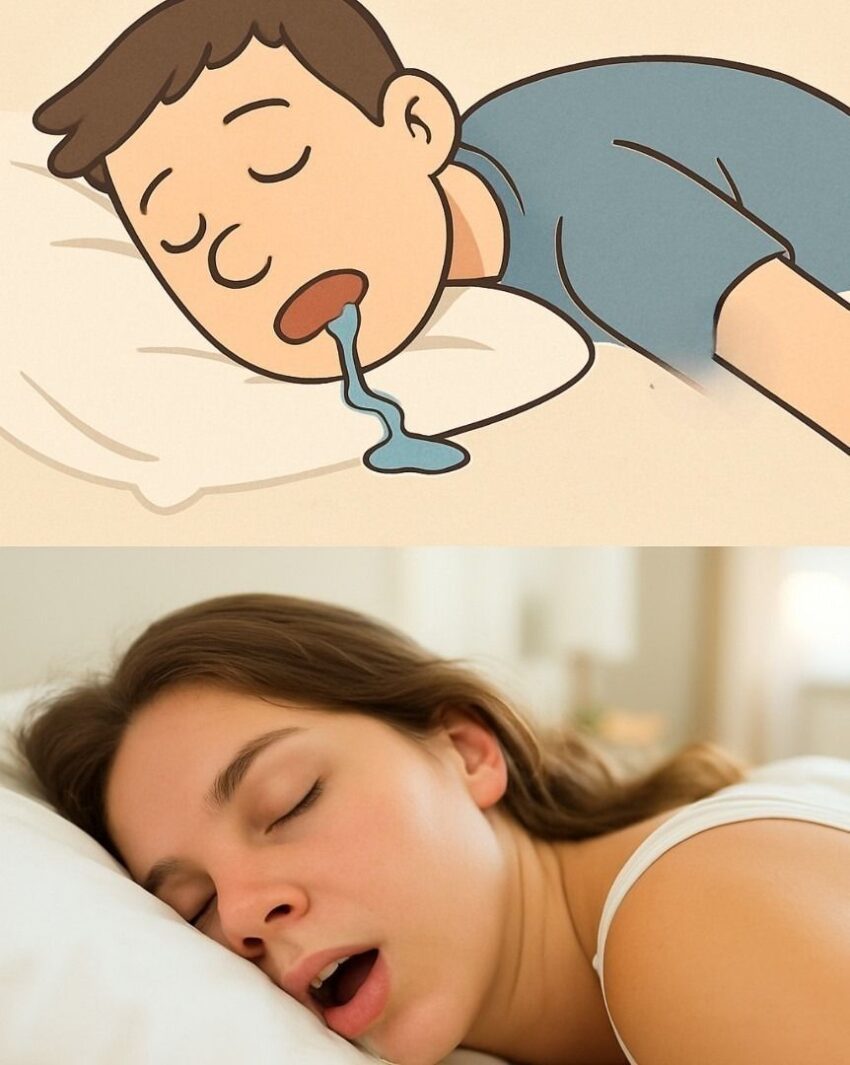
That “See more…” line is bait—the real claim is usually something like “your brain is fully relaxed” or “you’re in deep sleep.” It’s partly true at best, but mostly oversimplified.
😴 What drooling during sleep actually means
Drooling (Sialorrhea) happens when saliva isn’t swallowed and escapes the mouth. That’s influenced more by mechanics than by anything special about your brain.
🧠 The small grain of truth
During deeper sleep stages:
- your swallowing reflex slows down
- muscles relax more
So saliva can build up. That’s why drooling can happen in deeper sleep—but it’s not a reliable sign of “great sleep” or brain health.
✅ The real causes (more important)
1. Sleep position
Side or stomach sleeping lets saliva leak out due to gravity.
2. Mouth breathing
Blocked nose (allergies, cold) → mouth stays open → more drooling.
3. Extra saliva production
Can be triggered by:
- acid reflux
- certain foods before bed
- some medications
⚠️ When to pay attention
If drooling is:
- excessive or sudden
- paired with snoring or choking
- happening with difficulty swallowing
…it could point to issues like sleep-disordered breathing or other conditions worth checking.
🧾 Bottom line
Drooling while you sleep doesn’t reveal a “hidden brain secret.”
It’s usually just sleep position, breathing, and normal muscle relaxation—nothing mysterious.
If you want, I can break down real signs of good vs poor sleep quality (the ones doctors actually look at).
