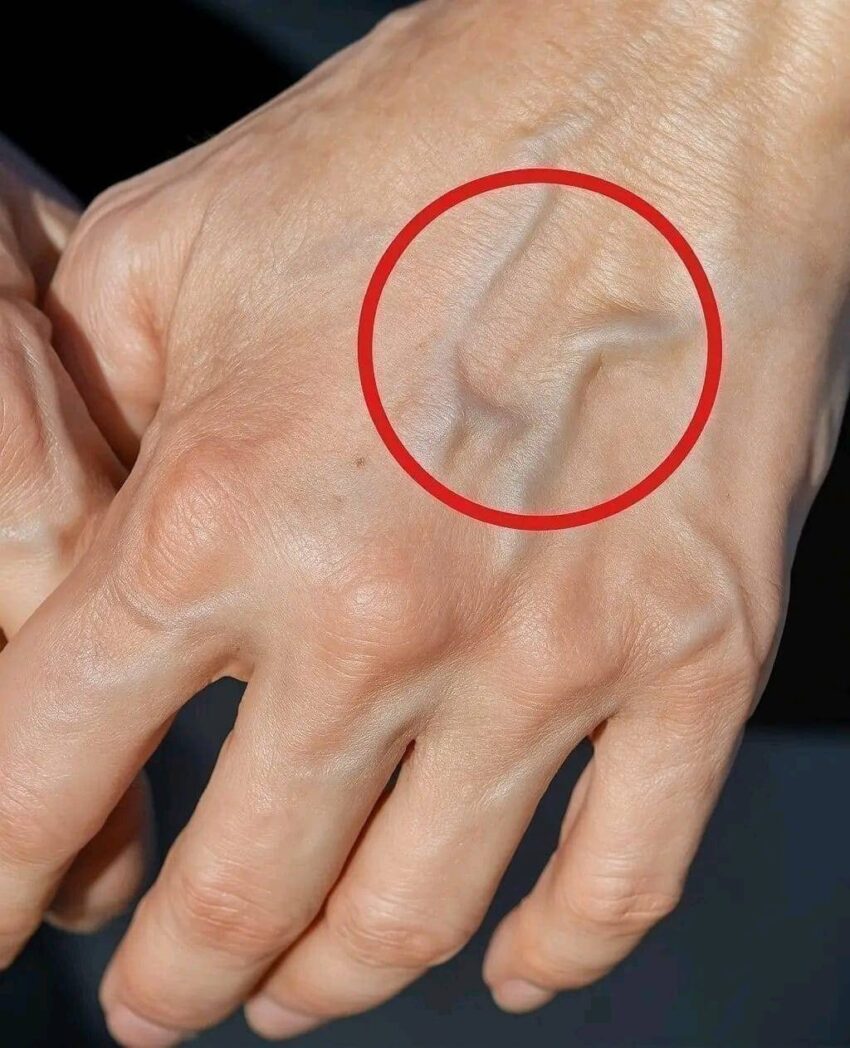
That’s another incomplete, clickbait-style claim.
“Visible veins” don’t mean one specific thing—they can happen for several normal reasons.
What visible veins usually mean
Most commonly, it’s completely harmless and related to:
1. Low body fat
- Less fat under the skin makes veins more noticeable
- Common in lean or athletic people
2. Genetics
- Some people naturally have more visible veins
- Skin thickness and vein size vary by person
3. Age-related skin changes
- Skin becomes thinner over time
- Makes veins more prominent, especially on hands and arms
4. Heat or exercise
- Veins expand (vasodilation)
- More visible temporarily after activity or in warm weather
When it can be related to a condition
Sometimes visible veins are linked to vein issues like:
- Varicose veins (bulging, twisted veins—usually in legs)
- Chronic venous insufficiency (poor blood flow return)
These usually come with other symptoms:
- aching or heaviness in legs
- swelling
- itching or skin changes
- veins that are raised, not just visible
What it does NOT mean
Visible veins do not automatically mean:
- poor health
- high blood pressure
- heart disease
- “toxic blood” (a common myth)
When to check with a doctor
- veins suddenly become very prominent
- pain, swelling, or redness appears
- skin changes or ulcers develop
- one limb looks different from the other
Bottom line
Visible veins are usually normal and harmless, especially if:
- they’ve always been there
- there’s no pain or swelling
The viral post is just trying to turn a common body feature into a dramatic “hidden warning.”
If you want, you can describe how the veins look (location, color, raised or flat), and I can help you tell if it’s normal or something worth checking.
