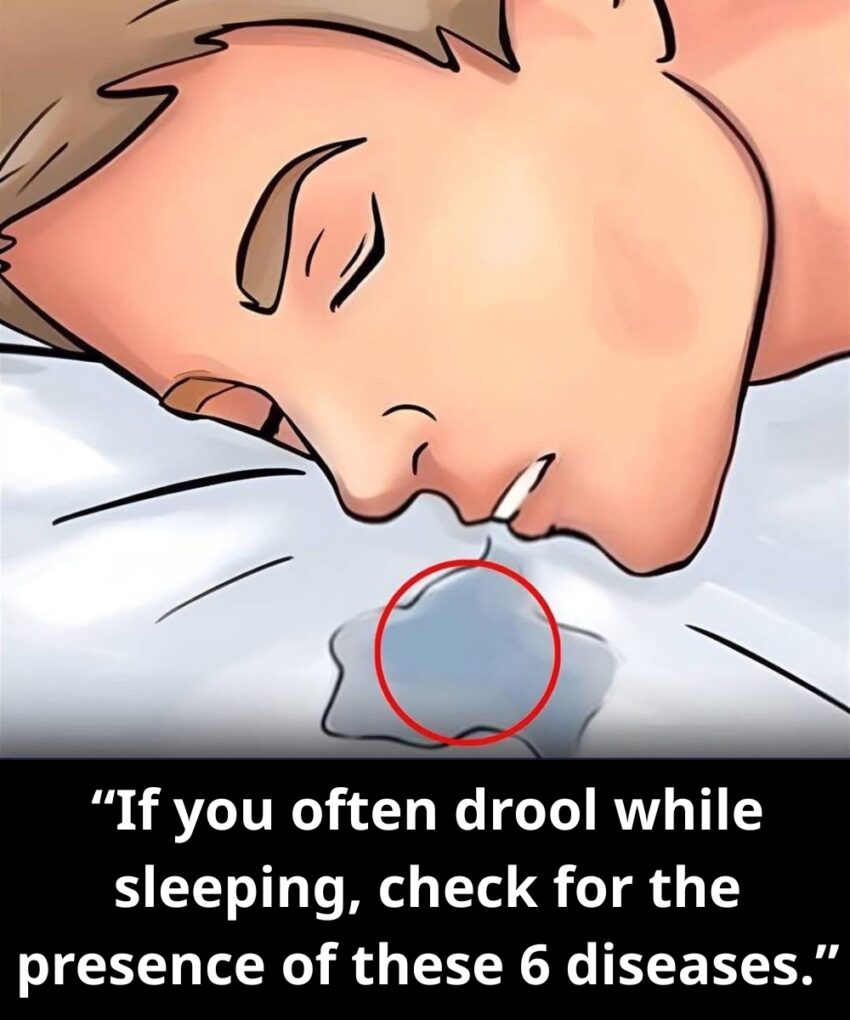
That headline sounds alarming, but occasional drooling during sleep is usually harmless. It often happens because your face muscles relax and your mouth falls open—especially if you sleep on your side.
However, frequent or excessive drooling can sometimes be linked to underlying issues. Here are 6 conditions worth being aware of:
😴 1. Sleep Apnea
Blocked airways during sleep can force you to breathe through your mouth, leading to drooling. Other signs include loud snoring, choking sounds, and daytime fatigue.
🤧 2. Allergic Rhinitis
Nasal congestion from allergies makes it hard to breathe through your nose, so your mouth stays open at night.
🦠 3. Sinus Infection
Similar to allergies, blocked sinuses can push you into mouth breathing, increasing saliva leakage.
🧠 4. Parkinson’s Disease
In some cases, drooling happens not because of excess saliva, but because swallowing becomes less frequent or slower.
⚡ 5. Stroke
If drooling is new and comes with facial weakness, slurred speech, or numbness, it could be a warning sign and needs urgent attention.
😬 6. Gastroesophageal Reflux Disease
Acid reflux can sometimes trigger excess saliva production, especially at night.
💡 When is it not a problem?
- Sleeping on your side or stomach
- Deep sleep relaxation
- Temporary congestion (cold/flu)
🚩 When to pay attention
- Drooling is new or getting worse
- You also snore heavily or feel tired all day
- You have trouble swallowing or speaking
- It happens along with neurological symptoms
✔️ Simple fixes to try first
- Sleep on your back with head slightly elevated
- Treat nasal congestion (steam, saline spray)
- Stay hydrated
- Avoid heavy meals right before bed
👉 Bottom line:
Most of the time, drooling in sleep is harmless. But if it’s frequent or comes with other symptoms, it’s worth checking—just to rule out something more serious.
If you want, I can help you figure out what’s most likely in your specific case based on your symptoms.
