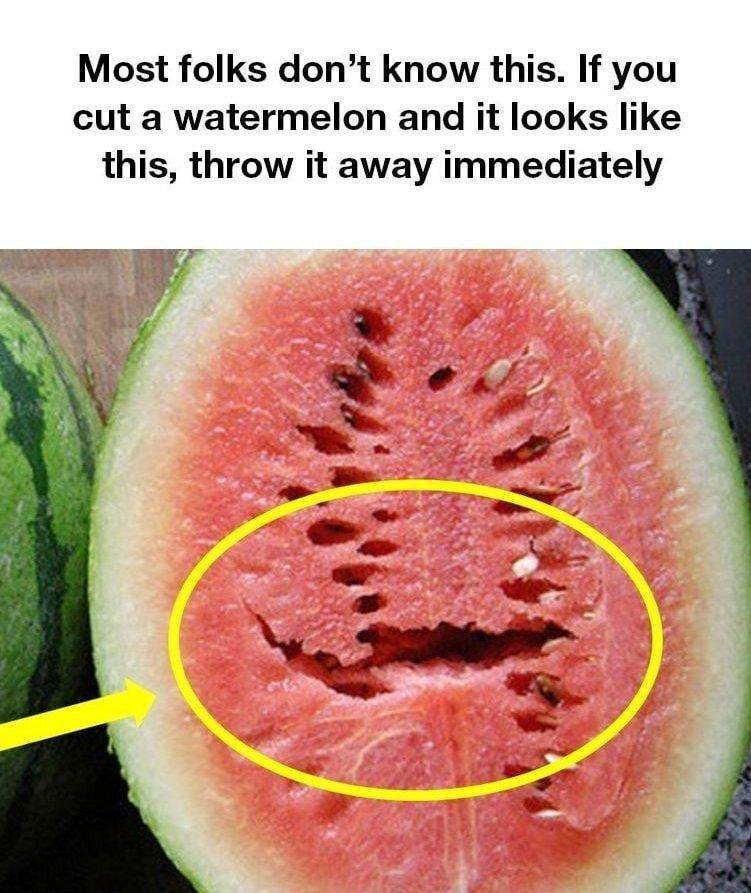
That warning is actually good advice—sometimes a watermelon can look fine outside but be unsafe or unpleasant inside. Here’s exactly what to watch for:
🍉 Signs you should throw a watermelon away
🚫 1. Cracked or hollow interior
If you cut it open and see:
- Large cracks
- A split or hollow center
👉 This is often called “hollow heart.”
It’s usually not dangerous, but:
- Texture is poor (dry, mealy)
- Taste is bland or off
✔️ You can eat it, but most people prefer to toss it.
🚫 2. Slimy, mushy, or grainy flesh
- Feels slippery or sticky
- Extremely soft or pulpy
👉 This means the fruit is overripe or starting to rot
✔️ Best to throw it out.
🚫 3. Sour or strange smell
Fresh watermelon should smell:
- Light
- Slightly sweet
If it smells:
- Sour
- Fermented (almost like alcohol)
👉 It has started to spoil
✔️ Do not eat it.
🚫 4. Unusual color (especially darker spots)
Watch for:
- Dark brown/black patches
- White streaks or mold-like fuzz
- Flesh that looks dull instead of bright red/pink
👉 These can indicate rot or contamination
✔️ Discard immediately.
🚫 5. Foamy or fizzy texture
If the inside looks:
- Bubbly
- Foamy
- Slightly “carbonated”
👉 That’s fermentation
✔️ Definitely throw it away.
⚠️ What about white lines or cracks?
Sometimes you’ll see:
- White streaks or fibrous veins
👉 This can be due to:
- Natural growth issues
- In some cases, excessive fertilizers
✔️ Usually safe, but taste may be off.
✅ Safe watermelon checklist
A good watermelon should be:
- Bright red or pink
- Juicy but firm
- Fresh, mildly sweet smell
- No slime, foam, or dark patches
Bottom line
- Bad smell, slime, mold, or fizz = throw it out
- Cracks alone = not dangerous, just low quality
If you want, you can describe (or upload a photo of) what you saw inside your watermelon—I can help you decide if it’s safe or not.
