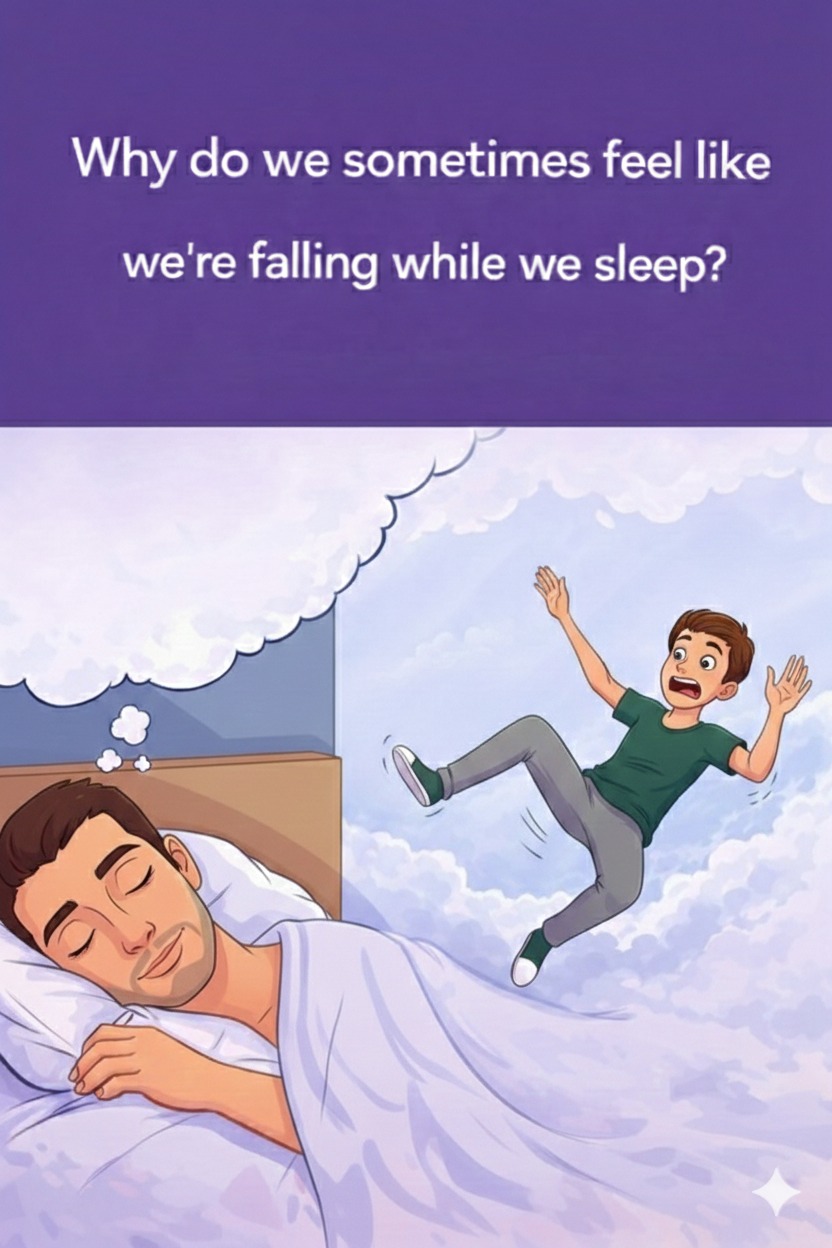
If Your Body Suddenly Jerks While Falling Asleep, Here’s What It Means
Introduction
That sudden jolt you feel just as you’re drifting off to sleep is actually very common. It’s known as a hypnic jerk, also called a sleep start. While it can feel strange or even alarming, it’s usually harmless.
What Is Happening in Your Body?
A hypnic jerk is an involuntary muscle contraction that occurs during the transition from wakefulness to sleep. It’s part of the body’s natural shift into rest mode.
This falls under a type of movement phenomenon related to Sleep transition reflex.
Why It Happens
1. Nervous System Adjustment
As you fall asleep, your brain slows down and your muscles relax. Sometimes the brain misinterprets this relaxation as a “falling” sensation and triggers a sudden muscle jerk.
2. Stress or Anxiety
High stress levels can make your brain more active at night, increasing the chances of these jerks.
3. Caffeine or Stimulants
Consuming caffeine late in the day can overstimulate your nervous system.
4. Physical Exhaustion
Being overly tired can make sleep transitions more abrupt, leading to jerks.
5. Irregular Sleep Schedule
Poor sleep habits can disrupt the normal process of falling asleep.
Common Sensations
People often report:
- A feeling of falling
- A sudden body twitch or jump
- A brief dream-like image
- Rapid heartbeat right after
Is It Dangerous?
In most cases, no. Hypnic jerks are:
- Very common
- Harmless
- Not a sign of disease
However, frequent or severe episodes may sometimes be confused with sleep disorders.
How to Reduce Them
- Limit caffeine, especially in the evening
- Maintain a regular sleep schedule
- Reduce stress before bed
- Avoid heavy exercise right before النوم
- Create a calm bedtime routine
When to See a Doctor
Consider medical advice if:
- Jerks happen very frequently
- They severely disturb sleep
- They are accompanied by other unusual symptoms
Conclusion
Sudden jerks while falling asleep are a normal body response during the transition into sleep. While they can feel unsettling, they are usually harmless and can often be reduced with better sleep habits and stress management.
