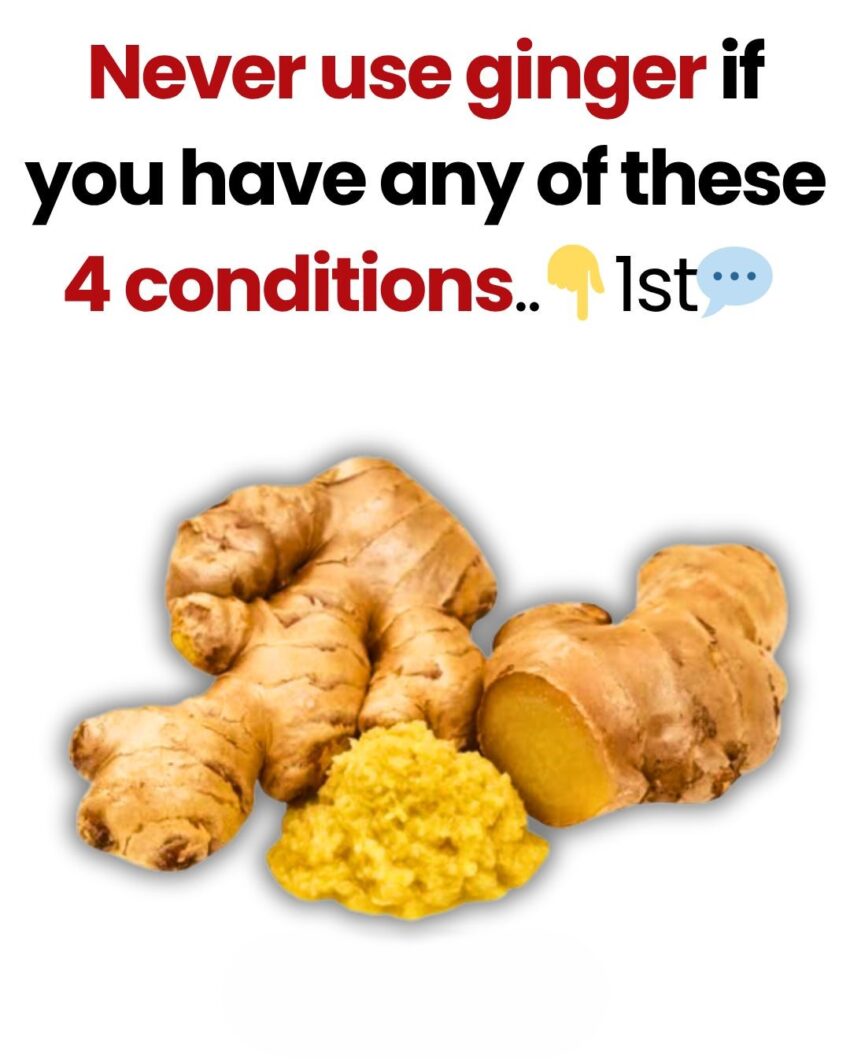
That headline is another fear-based oversimplification. Ginger isn’t universally dangerous—it’s a common food and herbal product—but like many things, it can cause problems in specific situations or at high doses.
Here’s the real, evidence-based view of Ginger:
👍 Generally safe for most people
In normal food amounts (tea, cooking), ginger is:
- safe for most healthy adults
- helpful for nausea and digestion
- mildly anti-inflammatory
⚠️ When ginger may need caution
1. Blood-thinning medications
Ginger may slightly increase bleeding risk when combined with:
- anticoagulants (like warfarin)
- antiplatelet drugs
2. Bleeding disorders
People with clotting problems should avoid high-dose supplements.
3. Gallbladder disease
Ginger can stimulate bile flow, which may worsen symptoms in some cases.
4. Low blood pressure
It may slightly lower blood pressure in some people.
5. Diabetes medication users
It can mildly affect blood sugar, so monitoring is important.
🚨 What the viral posts get wrong
They often claim:
- “Never use ginger if you have X disease”
- “It causes serious damage”
- “Doctors don’t tell you this”
In reality:
- risks are mostly about high-dose supplements, not normal food use
- interactions are manageable and well known
- it is not dangerous for most people when used normally
💡 Bottom line
Ginger is a generally safe, widely used spice with some mild medicinal effects—but it should be used carefully in high doses or with certain medications.
If you want, I can list herbs and supplements that actually have stronger, proven drug interactions, because ginger is actually on the mild side compared to many others.
