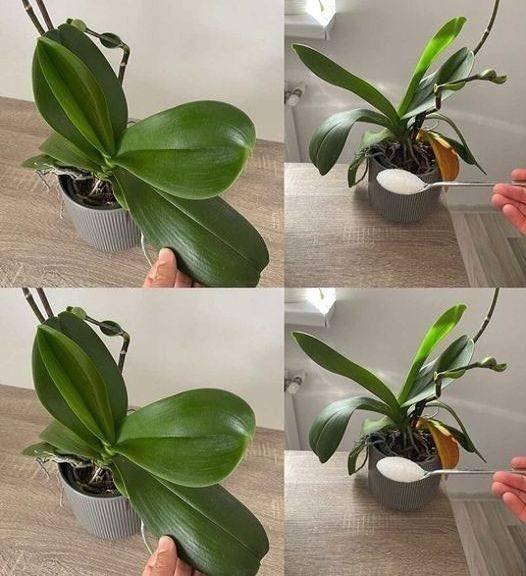
That claim is misleading. Orchids don’t have a “1 tablespoon and they bloom nonstop forever” fertilizer trick—especially not a universal one.
What’s really going on
Orchids (like Phalaenopsis, the most common house orchid) are:
- Slow-growing plants with natural bloom cycles
- Sensitive to over-fertilizing
- More dependent on light, temperature changes, and rest periods than “boost” feeding
So a single tablespoon of something won’t override their biology.
Why these claims spread
A lot of viral “orchid hacks” refer to things like:
- Diluted banana water
- Rice water
- Milk or yeast mixtures
- Coffee or cinnamon solutions
These can sometimes:
- Add small nutrients or organic matter
- Temporarily improve plant appearance
But they can also:
- Cause root rot
- Encourage fungus or bacteria
- Salt up the potting medium and damage roots over time
What actually makes orchids bloom
If your goal is more flowers, these are the real drivers:
1. Light (most important)
- Bright, indirect light (near an east or filtered south window)
2. Temperature drop
- A small night drop (about 5–10°F / 3–6°C) can trigger spikes
3. Proper fertilizing
- “Weak, weekly” rule (diluted balanced orchid fertilizer)
- Not tablespoons—more like ¼ to ½ strength
4. Root health
- Healthy silvery-green roots = healthy plant
5. Rest period after blooming
- They naturally pause before reblooming
Bottom line
Orchids don’t respond to magic tablespoons—they respond to consistent light, temperature cues, and gentle feeding.
If you want, tell me what orchid you have and what it’s currently doing (no blooms, dropping buds, yellow leaves, etc.), and I can help you figure out exactly why it isn’t reblooming.
