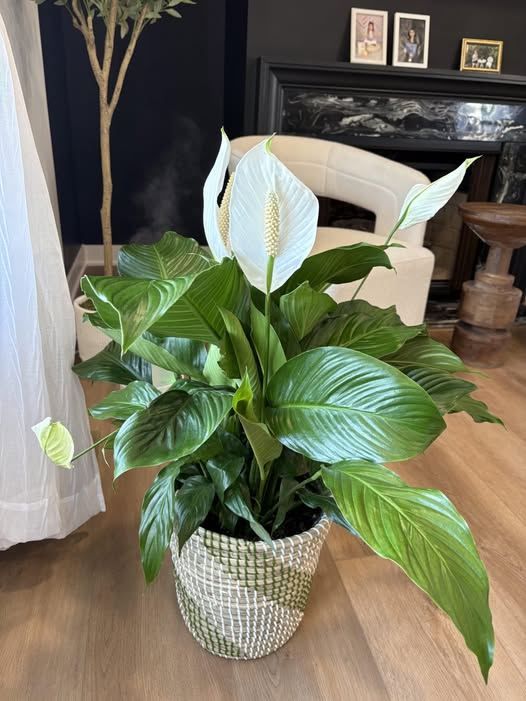
A Peace Lily (Spathiphyllum) is one of the most popular indoor tropical plants because it combines elegant appearance + easy care + tolerance for low light. Despite the name, it is not a true lily and belongs to the Araceae (aroid) family, like philodendrons and anthuriums.
🌿 PEACE LILY — FULL DETAILS
🌱 1. Appearance (What makes it special)


A peace lily has:
- Dark green, glossy leaves that grow directly from the soil
- White “flowers” (actually a spathe, a modified leaf)
- A central spike called a spadix (holds tiny true flowers)
- Growth habit: clumping, bush-like plant
Sizes vary:
- Small varieties: 30–40 cm (tabletop plants)
- Large varieties: up to 1–1.5 meters indoors
🌸 2. The “flower” explained
What looks like a white flower is actually:
- Spathe = white hood-like leaf
- Spadix = yellow/cream spike in the center
📌 Fun fact:
The white spathe can stay fresh for weeks, but eventually turns green as it ages.
☀️ 3. Light requirements
Peace lilies are famous for surviving low light, but:
- 🌤️ Best: Bright, indirect light (near a window with curtain)
- 🌑 Tolerates: Low light rooms (but fewer flowers)
- 🚫 Avoid: Direct sunlight (burns leaves)
If it stops flowering → usually needs more light.
💧 4. Watering (MOST IMPORTANT PART)
This plant “talks” to you:
- Leaves droop → it needs water
- After watering → it perks up within hours
Watering rules:
- Keep soil slightly moist
- Water when top 2–3 cm soil is dry
- Do NOT let it sit in water
📌 Common mistake:
Overwatering → root rot (most frequent cause of death)
🌡️ 5. Temperature & humidity
Being tropical, it prefers:
- 🌡️ Temperature: 18–27°C
- ❄️ Avoid cold drafts (below 12°C is harmful)
- 💨 Likes humidity (bathrooms are ideal spots)
🌱 6. Soil & potting
- Use well-draining potting mix
- Good mix: peat + perlite + compost
- Pot must have drainage holes
Repot every 1–2 years when roots get crowded.
🌼 7. Flowering cycle
Peace lilies don’t bloom constantly.
- Bloom season: mostly spring–summer
- Healthy plant = may bloom multiple times/year
- If no blooms:
- Too little light
- Old soil
- Needs fertilizer
🧪 8. Fertilizer needs
- Feed lightly every 6–8 weeks
- Use balanced liquid fertilizer (half strength)
- Over-fertilizing → brown leaf tips
⚠️ 9. Problems & diagnosis
🟡 Yellow leaves
- Overwatering
- Poor drainage
🟤 Brown tips
- Dry air
- Tap water chemicals (chlorine/fluoride)
🌿 Drooping leaves
- Underwatering (most common)
- Or sometimes overwatering (check soil)
🪲 Pests (rare indoors)
- Spider mites
- Mealybugs
🐶 10. Toxicity
⚠️ Peace lily is toxic to pets and humans if eaten
- Contains calcium oxalate crystals
- Causes mouth irritation, drooling, vomiting in pets
🏠 11. Benefits indoors
- Improves room aesthetics significantly
- Helps increase humidity slightly
- Often used in bedrooms, offices, living rooms
🧠 12. Why it’s so popular
- Survives low light conditions
- Visually elegant year-round
- Communicates water needs clearly
- Very forgiving compared to other flowering plants
🌿 Quick care summary
- Light: Bright indirect
- Water: When droopy / top soil dry
- Temperature: Warm indoor
- Maintenance: Low
If you want, I can also help you with:
- 🌱 “Why your peace lily is dying” diagnosis
- 🪴 Best pot size and soil mix for your climate (Multan)
- 🌸 How to make it bloom more often
- 🧾 Weekly care schedule
Just tell me 👍
