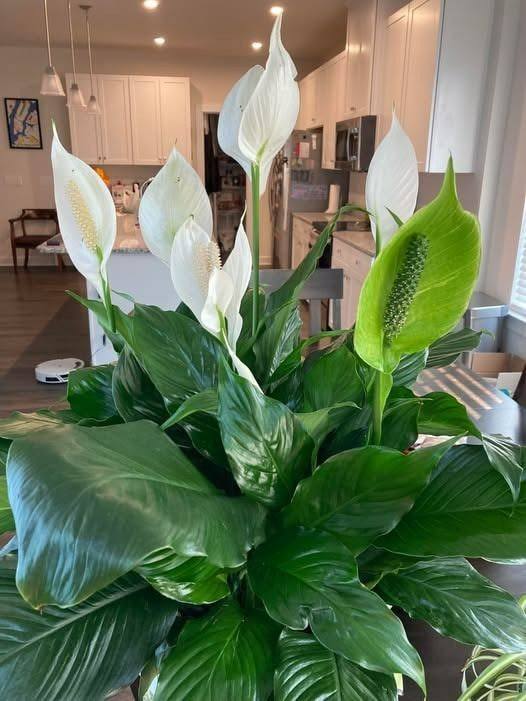
Peace Lily (Spathiphyllum) is a popular indoor houseplant known for its glossy green leaves and elegant white “flower” spikes (called spathes). It’s often chosen because it’s low-maintenance and can tolerate lower light conditions.
🌿 Key features
- Botanical type: Tropical evergreen plant
- Flowers: White hood-like spathes with a central spike
- Air-purifying: Helps remove some indoor air pollutants
- Size: Usually 1–3 feet indoors (can grow larger in ideal conditions)
☀️ Light requirements
- Prefers bright, indirect light
- Can survive in low light, but may produce fewer flowers
- Avoid direct sun (it burns the leaves)
💧 Watering
- Likes slightly moist soil
- Water when the top inch of soil feels dry
- It will visibly droop when thirsty—but usually recovers quickly after watering
🌡️ Temperature & humidity
- Ideal: 18–27°C
- Avoid cold drafts and sudden temperature changes
- Enjoys moderate to high humidity (typical indoor conditions in Multan can work if not too dry)
🪴 Soil & feeding
- Use well-draining potting soil
- Feed monthly in spring and summer with a balanced fertilizer (optional but helpful)
⚠️ Common issues
- Yellow leaves: often overwatering
- Drooping: usually underwatering (or sometimes overwatering)
- Brown leaf tips: dry air or salt buildup from tap water
☠️ Toxicity
Peace lilies are toxic to cats and dogs if ingested (can cause mouth irritation, drooling, vomiting).
If you want, tell me where you’re planning to keep it (bedroom, office, outdoor shade, etc.), and I can suggest the best care setup for your space.
