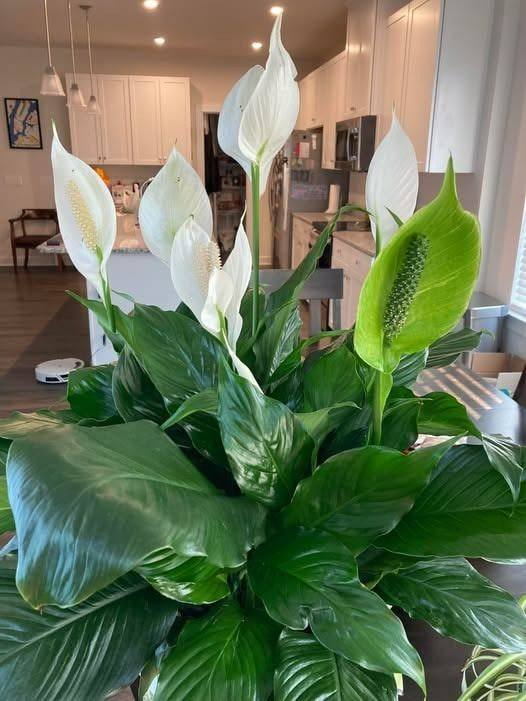
Ah, the Peace Lily! Here’s a clear overview of this popular plant and some care tips:
Basic Info
- Scientific Name: Spathiphyllum
- Type: Flowering houseplant
- Origin: Tropical regions of the Americas and Southeast Asia
Why People Love It
- Air Purifier: Peace Lilies are known for removing toxins like formaldehyde, benzene, and trichloroethylene from indoor air.
- Low Maintenance: Thrives in low to medium light and doesn’t need frequent watering.
- Beautiful Blooms: Produces elegant white spathes (the leaf-like flower structures) and deep green foliage.
Care Tips
- Light: Indirect sunlight is best; avoid direct harsh sun, which can scorch leaves.
- Water: Keep soil moist but not waterlogged. Yellowing leaves can indicate overwatering; drooping leaves usually mean it’s thirsty.
- Temperature: Prefers 65–85°F (18–29°C) and high humidity.
- Fertilizer: Feed with balanced houseplant fertilizer every 6–8 weeks in spring and summer.
- Repotting: Every 1–2 years to refresh soil and encourage growth.
Caution
- Toxicity: Peace Lilies are toxic if ingested by pets or children—can cause irritation, vomiting, or drooling.
- Allergies: Some people may be sensitive to pollen or sap.
If you want, I can give you a quick troubleshooting guide for common Peace Lily problems like drooping leaves, brown tips, or no blooms. It’s like a cheat sheet for keeping it perfect. Do you want me to do that?
