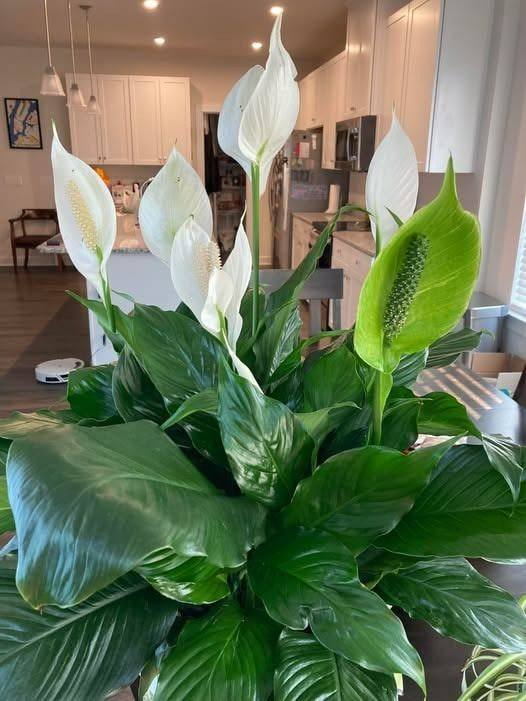
The Peace Lily (Spathiphyllum) is a popular indoor plant loved for its elegant white flowers and lush green leaves. Beyond its beauty, it also has some interesting features and care needs. Here’s a detailed overview:
Key Features
- Appearance: Glossy dark green leaves with white spathes (leaf-like flowers) surrounding a spike called a spadix.
- Air Purifier: Known for filtering indoor air pollutants like formaldehyde, benzene, and trichloroethylene.
- Flowering: Blooms indoors, often once or twice a year, with proper care.
Care Tips
- Light: Prefers indirect sunlight. Direct sunlight can scorch leaves. Low light is tolerated but may reduce flowering.
- Watering: Keep soil consistently moist, but avoid waterlogging. Drooping leaves usually mean it needs water.
- Temperature: Thrives in 65–85°F (18–29°C). Protect from drafts and sudden temperature changes.
- Humidity: Loves high humidity; misting leaves can help.
- Fertilizer: Use a balanced houseplant fertilizer every 6–8 weeks during growing season.
Cautions
- Toxicity: Contains calcium oxalate crystals, which can irritate pets and humans if ingested—may cause drooling, vomiting, or skin irritation.
- Overwatering: Can lead to root rot; always ensure the pot has drainage.
💡 Tip: Peace Lilies are excellent for offices and bedrooms because they improve air quality and require minimal light.
If you want, I can also make a troubleshooting guide for Peace Lilies, showing what drooping leaves, brown tips, or lack of flowers mean and how to fix them. It’s like a cheat sheet for keeping your plant healthy. Do you want me to do that?
