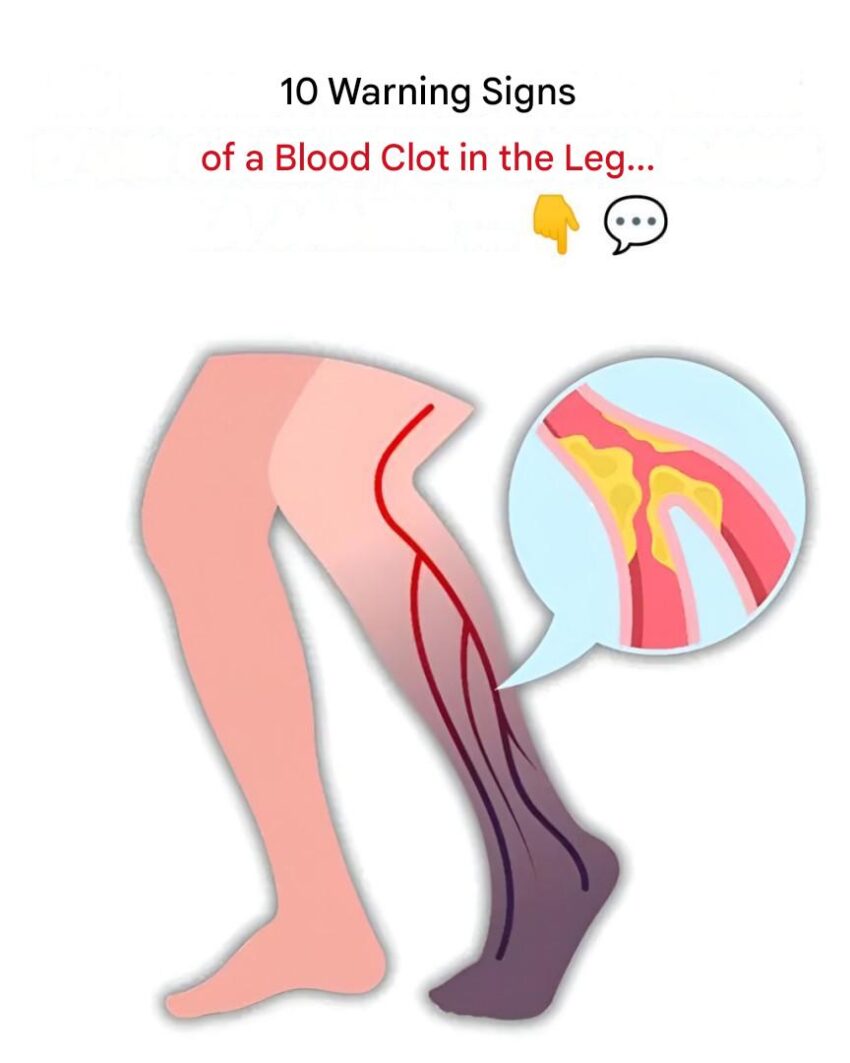
Deep vein thrombosis (DVT) is a serious condition where a blood clot forms in a deep vein, usually in the leg. Recognizing the early signs can help you act quickly and prevent complications like a pulmonary embolism.
Here are 10 common signs of a leg blood clot (DVT):
- Swelling in one leg
Especially in the calf or thigh, often appearing suddenly. - Leg pain or tenderness
May feel like a cramp or soreness, often starting in the calf. - Warmth in the affected area
The skin over the clot may feel noticeably warmer than the surrounding areas. - Red or discolored skin
The leg may appear reddish or have a bluish tint. - Pain when standing or walking
Discomfort may worsen when you put weight on the leg. - Enlarged veins (visible surface veins)
Veins may look more prominent or swollen. - Tightness in the leg
A feeling of fullness or stiffness, especially in the calf. - Unexplained fatigue in the leg
The leg may feel unusually heavy or tired. - Low-grade fever
Sometimes a mild fever accompanies a clot. - Shiny or stretched skin
The skin over the area may look tight or glossy.
⚠️ When to seek urgent help
Call emergency services or go to a hospital immediately if you notice:
- Sudden shortness of breath
- Chest pain (especially when breathing deeply)
- Coughing up blood
These may be signs of a pulmonary embolism, a life-threatening complication.
Prevention tips
- Stay active and avoid long periods of sitting
- Stretch your legs during travel
- Stay hydrated
- Maintain a healthy weight
- Consider compression stockings if recommended
If you’re concerned you might have symptoms, it’s important to get checked promptly—DVT can be treated effectively when caught early.
