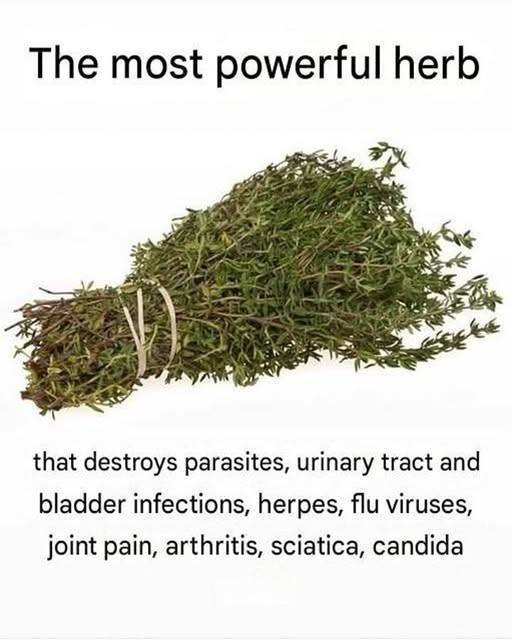
There isn’t a single “most potent herb” that reliably destroys parasites, cures urinary tract/bladder infections, eliminates herpes, and kills flu viruses all at once. That kind of all-in-one cure doesn’t exist in medical evidence, and claims like that are usually marketing exaggerations.
What does exist are different herbs and compounds with limited or supportive evidence against specific issues—but they are not replacements for proper diagnosis or treatment (especially for UTIs, herpes, or parasitic infections, which can become serious).
Here’s a grounded, evidence-based breakdown:
🦠 For parasites (intestinal worms/protozoa)
Some herbs have traditional use + limited research:
- Wormwood (Artemisia absinthium) – studied for antiparasitic effects, but can be toxic in high doses.
- Black walnut hull – traditionally used; evidence is mostly laboratory/traditional.
- Garlic – mild antiparasitic activity in some studies.
👉 Important: confirmed parasites usually require prescription antiparasitic drugs for reliable cure.
🚽 Urinary tract & bladder infections (UTIs)
Herbs do not reliably “kill” UTIs once established, but may help prevention or mild support:
- Cranberry (not an herb, but commonly used) – may reduce bacterial adhesion in bladder.
- D-mannose (natural sugar) – some evidence for preventing E. coli UTIs.
- Uva ursi (bearberry) – has antimicrobial compounds but should be used short-term only (can be toxic to liver with misuse).
👉 Active UTIs usually need antibiotics to prevent kidney infection.
🧬 Herpes (HSV-1 / HSV-2)
No herb eliminates herpes virus from the body (it remains dormant lifelong), but some may reduce outbreaks:
- Lemon balm (Melissa officinalis) – topical use may reduce lesion healing time.
- Lysine (amino acid, not an herb) – sometimes used to reduce outbreak frequency (mixed evidence).
- Propolis (bee resin) – some antiviral activity in topical studies.
👉 Prescription antivirals (like acyclovir) remain the most effective treatment.
🤧 Flu / viral infections
Herbs may support immune response or symptom relief, not “kill viruses” directly:
- Elderberry (Sambucus nigra) – may reduce duration of flu symptoms in some studies.
- Ginger – anti-inflammatory, symptom relief.
- Garlic – mild immune-modulating effects.
- Echinacea – mixed evidence for reducing severity/duration.
👉 Flu recovery mainly depends on immune system + rest; antivirals are sometimes needed in high-risk cases.
⚠️ Key reality check
- No herb reliably “destroys all pathogens” in the body.
- “Antimicrobial” in lab studies ≠ proven cure in humans.
- UTIs, herpes, and parasitic infections often require targeted medical treatment.
If you want a practical approach
If your goal is prevention and immune support, a reasonable natural stack people commonly use (with medical safety in mind) is:
- Garlic (dietary)
- Ginger tea
- Cranberry or D-mannose (UTI prevention)
- Lemon balm (topical for HSV outbreaks)
- Elderberry (short-term during flu season)
If you want, tell me which of these conditions you’re most concerned about (UTI, herpes, parasites, or flu), and I can give a more focused, safe, step-by-step approach—including when herbs help and when they absolutely don’t.
