Here’s a detailed, science-backed explanation about chicken color and what it really indicates about quality and safety:
1. Raw Chicken Color
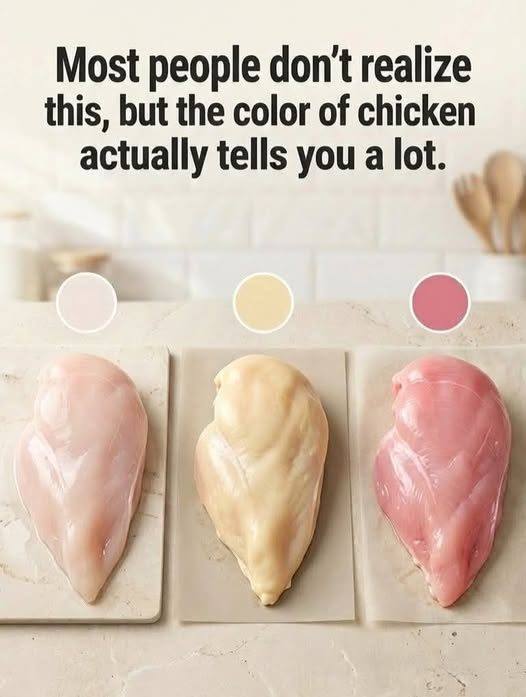
- Healthy raw chicken can range from pale pink to light yellow, depending on the breed, diet, and fat content.
- White or pinkish flesh is generally normal.
- Yellowish fat often comes from corn-fed chickens.
2. Signs of Spoilage
Be cautious if you notice:
- Gray or greenish tinge – may indicate bacterial growth.
- Dark spots or slimy texture – often a sign of decay.
- Unpleasant odor – sour, ammonia-like, or “off” smell is a major red flag.
Color alone isn’t the only quality indicator; smell, texture, and packaging date are crucial.
3. Cooked Chicken Color
- Fully cooked chicken should be white or slightly tan inside.
- Pinkish meat can occur near bones in younger chickens or due to certain cooking methods but should still reach safe internal temperature (165°F / 74°C).
- Red or raw-looking meat after cooking is unsafe and must not be eaten.
4. Factors Affecting Chicken Color
- Diet: Corn-fed or pasture-raised chickens often have yellow fat and skin.
- Age & Breed: Younger birds have paler meat; older birds may have slightly darker meat.
- Storage: Frozen or thawed chicken may show slightly darker spots, which is normal if odor and texture are fine.
5. Quick Quality Check
- Smell – fresh chicken should be neutral or slightly meaty.
- Texture – firm and moist, not sticky or slimy.
- Color – pale pink or light yellow is typical; gray, green, or moldy hues are unsafe.
💡 Bottom Line:
- Chicken color alone does not guarantee freshness, but abnormal gray, green, or dark patches are warning signs.
- Always check smell, texture, and sell-by date.
- Cook chicken to 165°F / 74°C to ensure safety.
I can also make a “Chicken Freshness Cheat Sheet” showing what raw and cooked chicken should look, smell, and feel like for easy safety checks.
Do you want me to create that?
