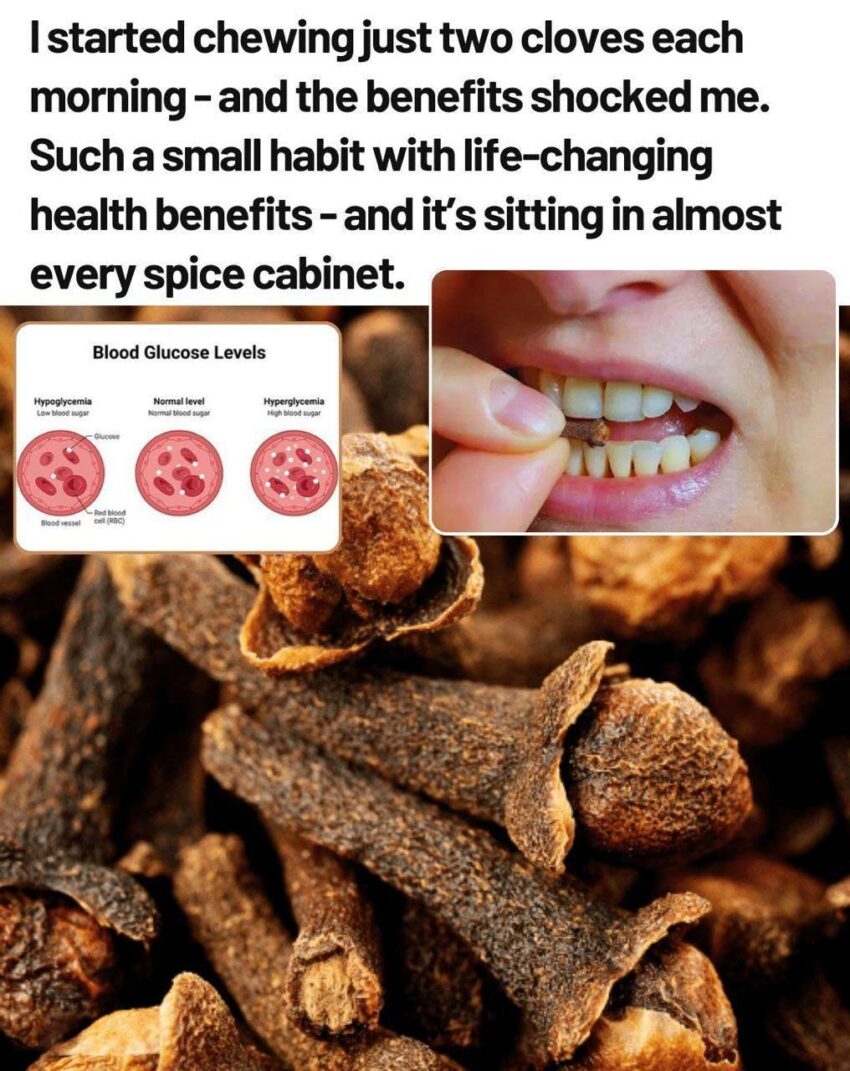
Cloves are a small spice with a very strong medicinal reputation, but it helps to separate real evidence from exaggerated “cure-all” claims.
Here’s a clear, practical guide to cloves.
🌿 What are cloves?
Cloves come from the dried flower buds of the clove tree (Syzygium aromaticum). They are rich in a compound called eugenol, which gives them their strong smell and many of their biological effects.
🧠 Potential health benefits (evidence-based)
1. Antioxidant effects
Cloves are extremely high in antioxidants, which help reduce oxidative stress in the body. This may support overall cell health.
2. Anti-inflammatory properties
Eugenol may help reduce inflammation, which is why cloves are sometimes studied for joint and digestive discomfort.
3. Dental pain relief (traditional use with some evidence)
Clove oil is known for numbing properties and is sometimes used for temporary relief of toothache. It’s even found in some dental products.
4. Blood sugar support (early evidence)
Some small studies suggest cloves may help improve insulin response, but this is not a treatment for diabetes and evidence is still limited.
5. Antimicrobial activity
Clove compounds can inhibit some bacteria and fungi in lab studies, which is why they’ve been used traditionally for oral and digestive hygiene.
🍵 Common uses
- Spice in cooking (curries, rice dishes, baked goods)
- Herbal teas (often combined with cinnamon or ginger)
- Clove oil (used externally, very diluted)
- Oral care products (toothpaste, mouthwash)
⚠️ Safety and side effects
Cloves are safe in normal food amounts, but concentrated use can cause issues:
- Mouth or skin irritation (especially undiluted clove oil)
- Liver strain in very high doses (due to eugenol)
- Increased bleeding risk if taken in large medicinal amounts (important if on blood thinners)
🚫 Common myths
- ❌ “Cloves cure infections completely” → No
- ❌ “Cloves detox the body” → Your liver and kidneys already do that
- ❌ “Cloves replace medical treatment for diabetes or pain” → Not true
🧾 Bottom line
Cloves are a powerful, healthy spice with antioxidant and mild medicinal properties, especially for oral health and inflammation support—but they are not a cure-all remedy.
If you want, I can also explain:
- Clove oil vs whole cloves (which is safer and more effective)
- Or how cloves compare to cinnamon and ginger for inflammation support
