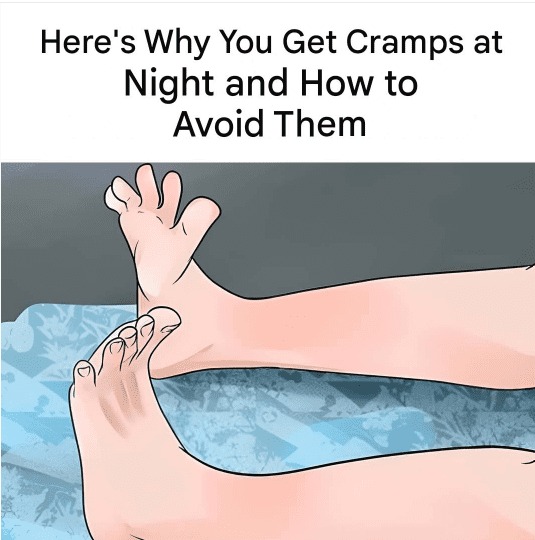
Nighttime cramps—those sudden, painful muscle contractions in your legs or feet—are more common than many realize. They’re usually harmless, but they can signal underlying issues. Here’s a detailed breakdown of why they happen:
⚡ Why We Get Cramps at Night
1. Muscle Fatigue or Overuse
- Exercising or standing for long periods during the day can overwork muscles, especially calves and thighs.
- Fatigued muscles may contract involuntarily at night, causing cramps.
2. Dehydration
- Lack of fluids can reduce electrolyte balance, affecting muscle contraction and relaxation.
- Sodium, potassium, calcium, and magnesium deficiencies can make muscles more prone to cramping.
3. Electrolyte Imbalances
- Low potassium or magnesium—from diet, sweating, or certain medications—can trigger cramps.
- Calcium deficiency can also affect nerve signals to muscles, causing sudden contractions.
4. Poor Circulation
- Conditions like peripheral artery disease, diabetes, or varicose veins can limit blood flow to leg muscles.
- Reduced oxygen delivery makes muscles more susceptible to spasms at rest.
5. Nerve Compression
- Nerves in the spine (like those affected by sciatica or lumbar disc problems) can misfire at night, causing cramps in the legs or feet.
6. Medications
- Certain drugs can increase the risk of cramps, including:
- Diuretics (used for high blood pressure)
- Statins (cholesterol medications)
- Beta-agonists (asthma medications)
7. Sleeping Position
- Pointing your toes down while sleeping can shorten calf muscles, making them more likely to cramp.
8. Age Factor
- People over 50 are more prone because muscles naturally lose flexibility and nerve function may decline.
Tips to Reduce Night Cramps
- Stretch before bed: Calves, hamstrings, and feet.
- Stay hydrated: Drink water throughout the day.
- Maintain electrolytes: Include bananas, nuts, dairy, or leafy greens in your diet.
- Change sleeping positions: Avoid pointing toes downward for long periods.
- Exercise moderately: Avoid overworking muscles close to bedtime.
- Check medications: Ask your doctor if your medicine may contribute.
💡 Bottom Line:
Night cramps are usually caused by muscle fatigue, dehydration, electrolyte imbalance, or nerve issues. They are more common with age, certain medications, and prolonged inactivity. Simple lifestyle adjustments like stretching, hydration, and proper nutrition can dramatically reduce their frequency.
If you want, I can make a quick “nighttime cramp prevention routine” you can follow before bed to almost eliminate them. Do you want me to make that?
