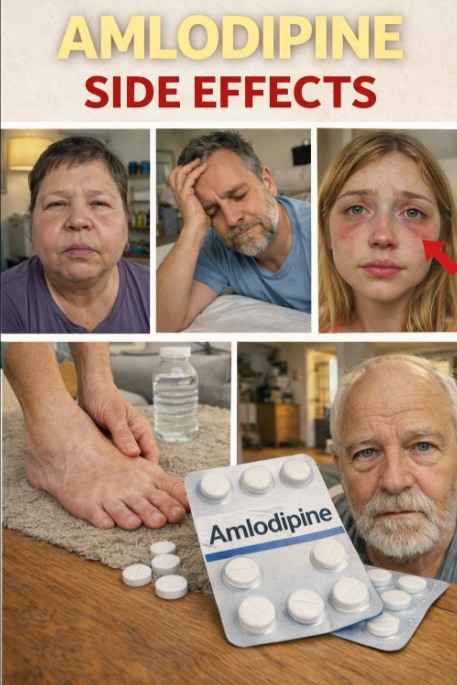
That title is misleading. Doctors do explain amlodipine side effects—it’s one of the most commonly prescribed blood pressure medicines and is well studied.
Related medication: Amlodipine
❤️ What amlodipine is used for
- High blood pressure
- Chest pain (angina)
- Heart protection in some patients
Related condition: Hypertension
⚠️ Common side effects (real and known)
🦵 1. Swelling of ankles/feet (most common)
- Fluid buildup in lower legs
- Usually dose-related
😴 2. Fatigue or tiredness
- Body adjusts to lower blood pressure
🌡️ 3. Flushing (warm face/redness)
- Blood vessels relax and widen
🤕 4. Headache
- Often temporary
💓 5. Palpitations
- Feeling of fast heartbeat in some people
🧍 6. Dizziness (especially when standing)
- From lower blood pressure
🍽️ 7. Nausea or stomach discomfort
💤 8. Sleepiness or low energy
🦷 9. Gum swelling (rare but known)
- Called gingival hyperplasia
⚖️ 10. Mild weight changes (fluid-related)
💪 11. Muscle cramps (less common)
😮 12. Rare allergic reactions
- Rash or itching
🚨 Important truth
- Most side effects are mild and manageable
- Doctors routinely monitor and adjust dose if needed
- Benefits (stroke/heart protection) are usually greater than risks
❌ Why “doctors never say this” is false
- These effects are in medical guidelines
- Pharmacists and doctors explain them regularly
- Patient information leaflets include them
🧠 Simple truth
👉 Amlodipine is widely used and generally safe
👉 Side effects exist but are well known, not hidden
⚠️ When to contact a doctor
- Severe swelling
- Fainting or very low blood pressure
- Chest pain or irregular heartbeat
- Allergic reactions
✅ Bottom line
✔ Side effects are real but mostly mild
❌ Nothing is “hidden” or secret
✔ It is an effective blood pressure medicine for many people
If you want, I can explain how to reduce amlodipine side effects (especially ankle swelling) naturally and safely 👍
