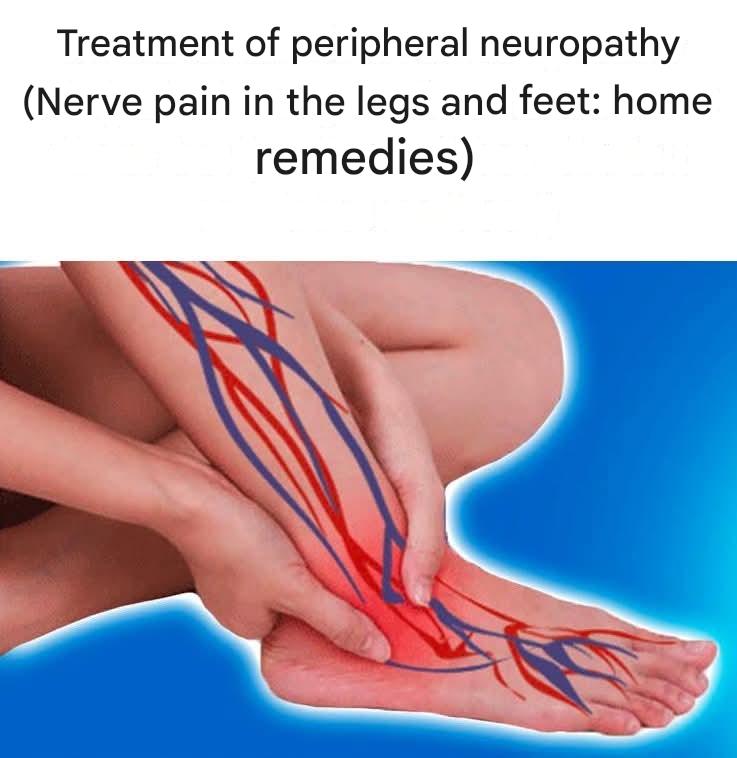
Peripheral neuropathy (nerve pain in the legs and feet) happens when nerves are damaged or irritated, often causing burning, tingling, numbness, or shooting pain. It can come from diabetes, vitamin deficiencies, infections, medications, or other conditions. Treatment depends on the cause, but many home-based strategies can significantly reduce symptoms and improve comfort.
Home remedies for nerve pain in feet and legs
1. Keep blood sugar stable (if diabetic)
If you have diabetes, controlling blood glucose is the most important step because high sugar continues to damage nerves.
- Follow a low-sugar, balanced diet
- Take prescribed diabetes medications regularly
- Monitor glucose levels consistently
2. Warm and cold therapy
- Warm baths or heating pads: relax muscles and improve blood flow
- Cold packs: help reduce sharp burning pain or inflammation
Use each for 10–15 minutes, but avoid extreme temperatures to prevent skin injury (especially if sensation is reduced).
3. Foot care and daily inspection
Reduced sensation increases risk of unnoticed injuries.
- Check feet daily for cuts, blisters, or infections
- Keep skin moisturized (but not between toes)
- Wear comfortable, padded shoes
- Avoid walking barefoot
4. Gentle exercise (very important)
Regular movement improves circulation and nerve health:
- Walking (short, frequent sessions)
- Stretching calves and feet
- Light yoga or balance exercises
- Swimming or stationary cycling
Exercise may initially feel uncomfortable but usually improves symptoms over time.
5. Massage and self-stimulation
- Gentle foot massage can reduce tingling and improve blood flow
- Rolling a tennis ball or frozen water bottle under the foot may relieve discomfort
- Vibration therapy devices can also help some people
6. Improve vitamin intake
Nerve health depends heavily on nutrition:
- Vitamin B12 deficiency is a common cause of neuropathy
- Include foods like eggs, fish, dairy, meat, and fortified cereals
- Leafy greens and nuts support nerve function
If deficiency is suspected, supplements should be taken after medical advice.
7. Pain-relieving topical treatments
Some people find relief from:
- Capsaicin cream (reduces pain signal transmission)
- Lidocaine patches or gels
These are applied directly to painful areas.
8. Lifestyle adjustments
- Stop smoking (it reduces blood flow to nerves)
- Limit alcohol (can worsen nerve damage)
- Maintain healthy weight to reduce pressure on nerves
9. Stress and sleep management
Chronic pain often worsens with stress:
- Practice deep breathing or meditation
- Maintain a regular sleep schedule
- Reduce caffeine intake in the evening
When to seek medical care
Home care helps, but medical evaluation is important if:
- Pain is worsening or spreading
- You have diabetes with new symptoms
- There is muscle weakness or loss of balance
- Wounds on feet are not healing
- Pain becomes severe or constant
Doctors may prescribe medicines such as nerve pain modulators (for example, drugs like gabapentin or pregabalin), or treat underlying causes like diabetes or vitamin deficiencies.
If you want, I can also give:
- A diet plan for nerve healing
- Or simple foot exercises for neuropathy relief at home
- Or guidance based on your symptoms (burning, numbness, or cramps)
