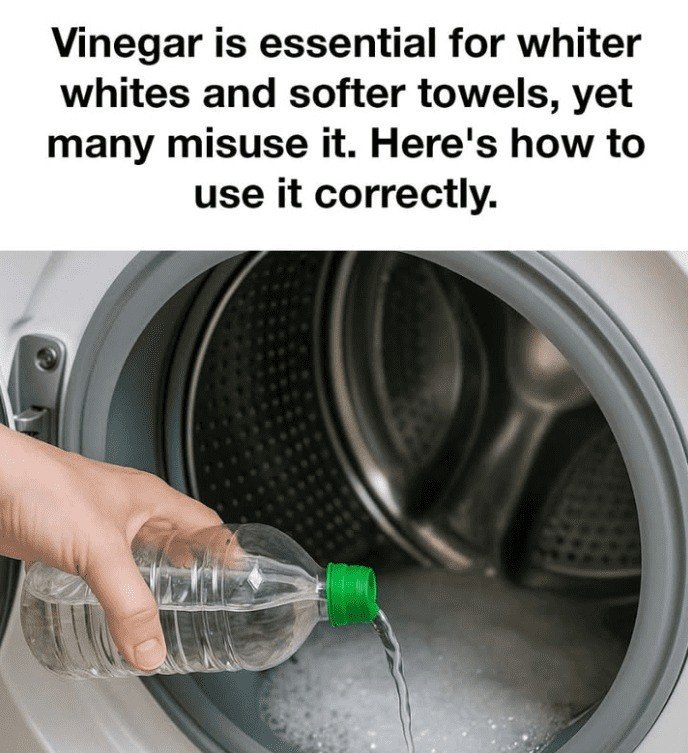
That claim is partly true—but often misunderstood. Vinegar can improve laundry results, but only if used correctly. Misusing it can actually reduce cleaning performance or damage fabrics over time.
What vinegar actually does in laundry
White distilled vinegar (acetic acid) can:
- Help remove detergent residue (which dulls whites)
- Neutralize odors
- Soften fabrics naturally (by breaking down mineral buildup)
👉 It’s especially useful in areas with hard water.
How to use vinegar correctly
1. For softer towels
- Add ½ to 1 cup white vinegar to the rinse cycle
- Do NOT add it with detergent
✔ Helps remove stiffness from detergent buildup
✔ Towels feel softer without fabric softener
2. For brighter whites
- Add ½ cup vinegar in the rinse cycle
- Occasionally soak whites in:
- warm water + 1 cup vinegar (30–60 minutes)
✔ Helps remove dulling residue
❗ But it does NOT “bleach” or whiten like oxygen bleach
3. To remove odors
- Add vinegar to rinse cycle
- Works well for:
- musty towels
- gym clothes
Common mistakes people make
❌ Mixing vinegar with detergent
- Cancels out cleaning effectiveness (acid vs alkaline)
❌ Using it every single wash
- Over time, acidity may wear down:
- rubber seals (washing machine)
- elastic fibers in clothes
❌ Expecting dramatic whitening
- Vinegar is a supporting cleaner, not a stain remover
When NOT to use vinegar
- On delicate fabrics (like silk)
- With chlorine bleach (can release harmful fumes)
- Constant daily use in machines
Bottom line
Vinegar is helpful for:
✔ softening towels
✔ reducing odors
✔ removing residue
But it’s not a miracle whitening agent—and proper use (especially in the rinse cycle) makes all the difference.
If you want, I can show you a perfect laundry routine that combines detergent, vinegar, and oxygen bleach safely for best results.
