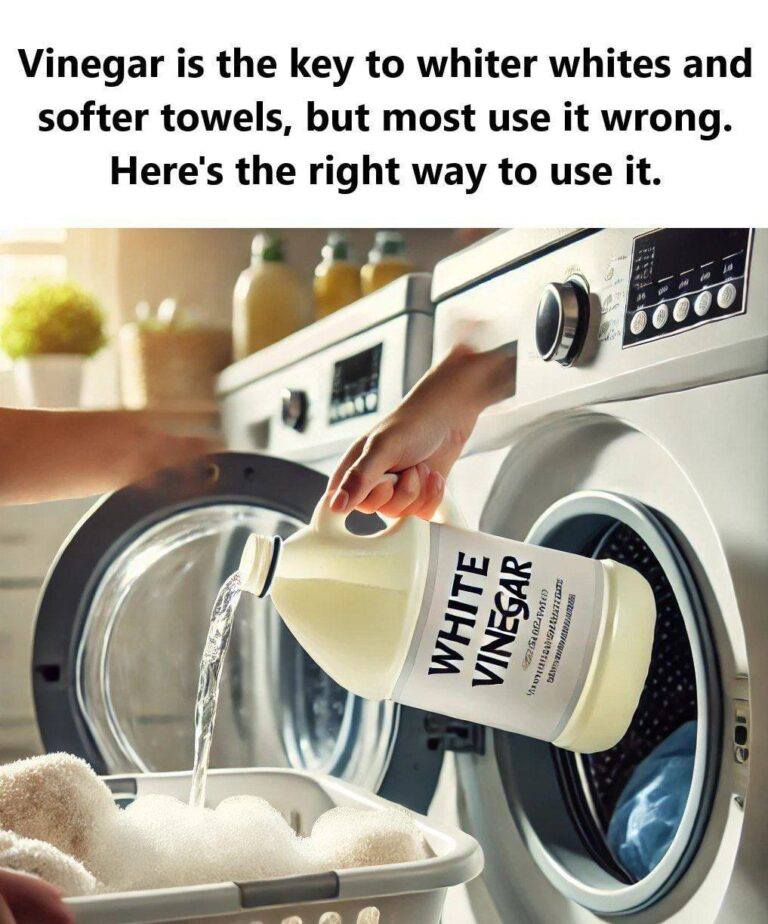
Vinegar can help your laundry—but it’s not magic, and using it the wrong way can do nothing (or even cause issues). Used correctly, it can make whites look brighter and towels feel softer.
Why vinegar works
Plain White vinegar (acetic acid) helps by:
- Breaking down detergent residue
- Dissolving mineral buildup from hard water
- Neutralizing odors
That’s why fabrics can come out softer and less dull.
The right way to use it
1. Add it to the rinse cycle (not the wash cycle)
Put about ½ cup in the fabric softener compartment or directly during the rinse.
Why:
If you add it during the wash, it can cancel out detergent effectiveness.
2. Use it instead of fabric softener
It softens towels naturally without coating fibers.
Why this matters:
Commercial softeners leave a waxy layer that reduces towel absorbency over time.
3. For dingy whites: pre-soak occasionally
Mix warm water + 1 cup vinegar, soak clothes for 30–60 minutes before washing.
Why:
Helps lift buildup that makes whites look gray.
4. Don’t overuse it
Stick to small amounts and occasional use.
Why:
Too much acid over time may wear down rubber seals in washing machines or weaken certain fabrics.
Common mistakes people make
- Mixing vinegar with bleach
This can release harmful chlorine gas—never combine them. - Using it every single load in large amounts
More is not better here. - Expecting stain removal
Vinegar isn’t a strong stain remover for things like grease or ink.
What results to expect
- Towels feel softer and fluffier
- Whites look a bit brighter (not magically “new”)
- Odors are reduced
Bottom line
Vinegar is a useful maintenance tool, not a miracle fix. Use it correctly in the rinse cycle, keep amounts moderate, and you’ll get the benefits without the downsides.
If you want, I can give you a simple laundry routine based on your washer type and water hardness.
