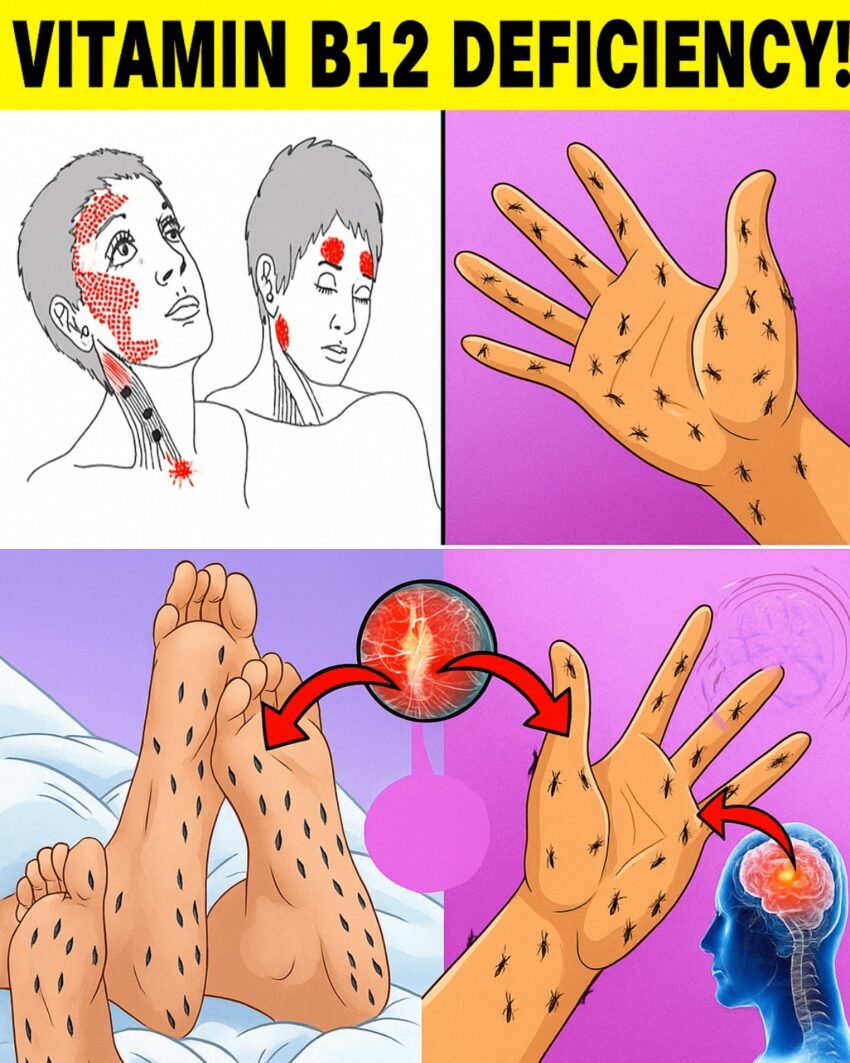
Vitamin B12 is essential for red blood cell production, nerve function, and DNA synthesis. A deficiency can develop slowly and sometimes goes unnoticed, but ignoring it can lead to serious complications. Here are the key symptoms that should never be ignored:
1. Fatigue and Weakness
- Feeling unusually tired even after adequate rest.
- Often one of the earliest signs.
2. Numbness or Tingling
- Pins-and-needles sensations in hands, feet, or legs.
- Caused by nerve damage due to low B12.
3. Pale or Jaundiced Skin
- Low red blood cell count may make skin pale.
- Breakdown of cells can sometimes cause a yellowish tint.
4. Difficulty Walking or Balance Issues
- Weakness, tingling, or nerve damage can cause unsteady gait.
5. Cognitive Issues
- Memory problems, confusion, or difficulty concentrating.
- Can mimic early signs of dementia if untreated.
6. Shortness of Breath and Dizziness
- Low red blood cell levels reduce oxygen delivery, causing breathlessness.
7. Glossitis and Mouth Ulcers
- Swollen, red, or painful tongue.
- Mouth ulcers or burning sensations may occur.
8. Mood Changes
- Depression, irritability, or mood swings may develop.
9. Vision Problems
- Blurred or disturbed vision due to nerve damage in the eyes (optic neuropathy).
10. Heart Palpitations
- Low red blood cell count can strain the heart, causing irregular heartbeat.
⚠️ Important Notes
- People at higher risk: Vegans/vegetarians, elderly, people with intestinal disorders (e.g., celiac, Crohn’s), or those on certain medications like proton pump inhibitors.
- Untreated B12 deficiency can lead to permanent nerve damage.
💡 Tip: If you notice several of these symptoms, ask your doctor for a B12 blood test. Early supplementation—by diet, oral tablets, or injections—can prevent long-term complications.
I can also make a quick guide of the top 7 foods richest in B12, so you can naturally boost your intake.
