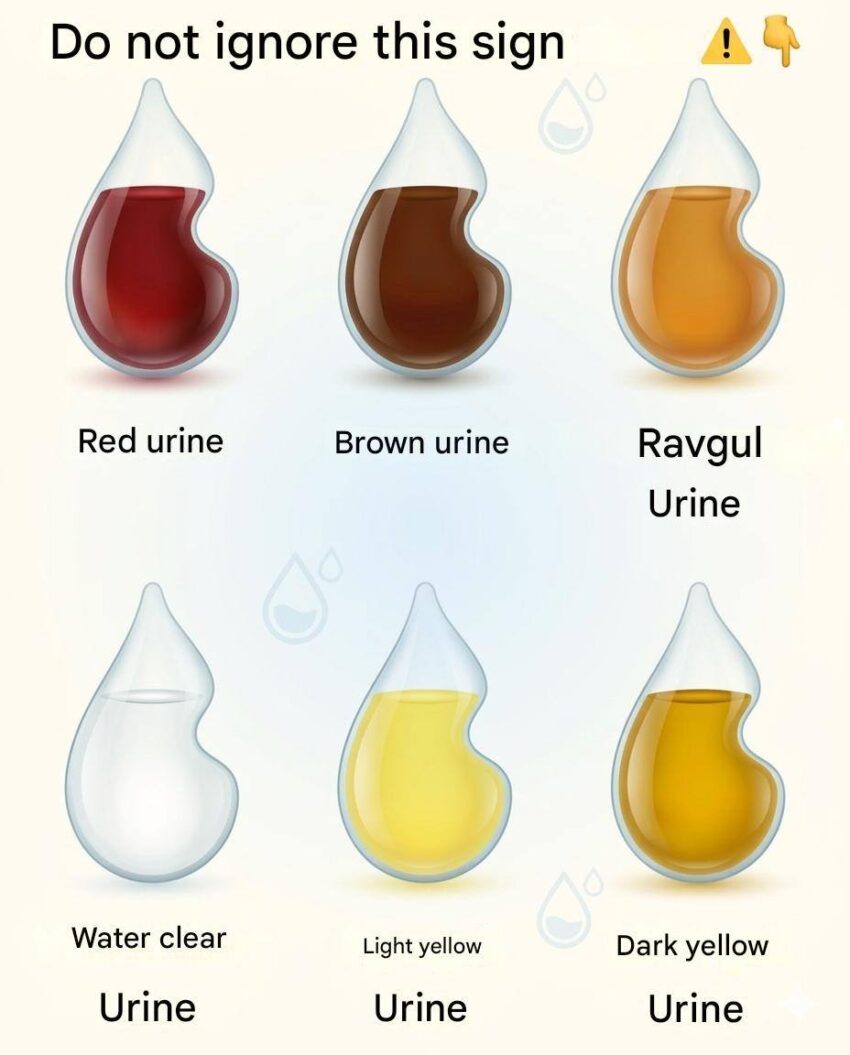
Urine color can give useful clues about hydration and sometimes health issues, but it’s not a diagnosis on its own. A lot of social media posts exaggerate it—so think of it as a warning indicator, not a test result.
Urinary tract infection is one example of a condition that can sometimes affect urine appearance, but most color changes are harmless.
🚰 What different urine colors usually mean
💧 Clear / very pale yellow
- Well hydrated
- Possibly drinking a lot of water
👉 Usually normal, but too clear all the time may mean overhydration
🌼 Light yellow (ideal)
- Normal, healthy hydration
- This is the “target” color
🟡 Dark yellow / amber
- Dehydration (most common cause)
- Need more fluids
🟠 Orange
Possible causes:
- Dehydration
- Certain medications or vitamins
- Rarely liver or bile issues
⚠️ If persistent + other symptoms (fatigue, yellow eyes), get checked
🔴 Pink or red
Possible causes:
- Beets or food dyes (harmless)
Beetroot - Blood in urine (important)
- Infection, stones, or other urinary issues
⚠️ If not from food, needs medical attention
🟤 Brown / cola-colored
Possible causes:
- Severe dehydration
- Liver or muscle breakdown issues
- Certain medications
⚠️ Should be checked if persistent
🟢 Blue or green (rare)
- Food coloring
- Certain medications
- Rare metabolic conditions
🚨 When urine color matters more
See a doctor if color changes come with:
- Pain or burning while urinating
- Fever
- Blood in urine (not food-related)
- Persistent dark or unusual color
🧠 Key truth
- Most urine color changes = hydration status
- Only a few cases indicate disease
- Color alone is not enough for diagnosis
🧾 Bottom line
- Pale yellow = healthy
- Dark yellow = drink more water
- Red/brown (without food cause) = get checked
- Most viral “color charts” online are oversimplified
If you want, I can also explain how dehydration affects your kidneys and energy levels in simple terms, or how to use urine color properly as a hydration guide.
