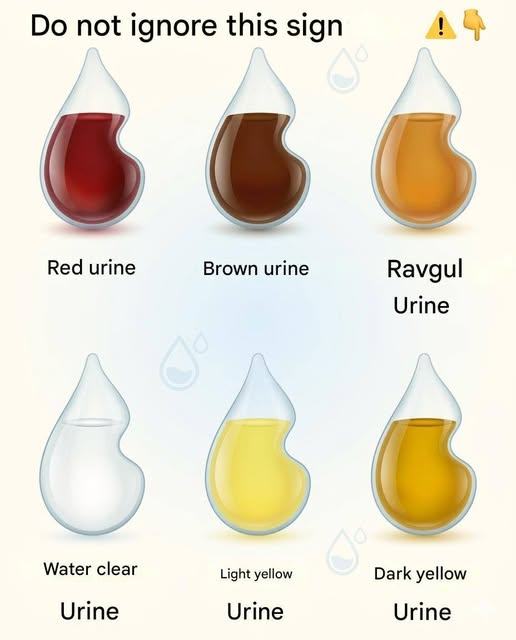
Urine color can give useful clues about hydration and sometimes health issues, but it’s not a diagnosis on its own. Here’s a clear guide 👇
🚽 What Urine Color Means
💛 1. Pale yellow (light straw color)
✔️ Normal / healthy
- Well hydrated
- Kidneys working normally
🌕 2. Dark yellow
⚠️ Mild dehydration
- You may need more water
- Common after sweating or not drinking enough
🍯 3. Amber or honey color
🚨 More significant dehydration
- Body is conserving water
- Drink fluids soon
💧 4. Clear (colorless)
💦 Overhydration or very high fluid intake
- Usually not dangerous
- But constantly clear urine may mean you’re drinking too much water
🟠 5. Orange
⚠️ Possible causes:
- Dehydration
- Certain vitamins (especially B-complex)
- Some medications
- Rarely liver or bile issues
🩷 6. Pink or red
🚨 Needs attention if not from food
Possible causes:
- Blood in urine
- Urinary tract infection
- Kidney stones (Kidney stones)
- Beets or berries (harmless food cause)
🍵 7. Brown or tea-colored
⚠️ Possible serious causes:
- Severe dehydration
- Liver problems (e.g., hepatitis)
- Muscle breakdown in rare cases
🟢 8. Green or blue (rare)
- Food dyes
- Certain medications
- Rare bacterial infections
🧠 Simple Rule to Remember
- 🟢 Pale yellow = healthy
- 🟡 Dark yellow = drink water
- 🔴 Red/brown (unexplained) = get checked
⚠️ When to see a doctor
Seek medical advice if you notice:
- Blood in urine without food cause
- Persistent dark brown urine
- Pain, burning, or fever
- Sudden changes that don’t go away
✅ Bottom line
Urine color mainly reflects:
👉 hydration level
👉 sometimes diet or medication
👉 occasionally health problems
If you want, I can also show you how to tell if your kidneys are healthy using simple daily signs 👍
