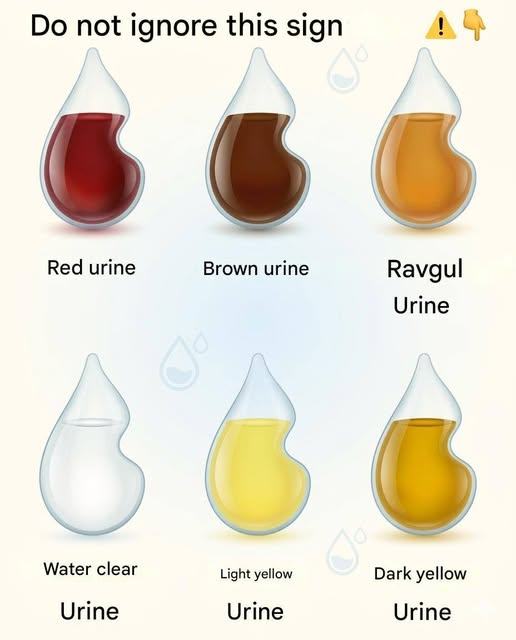
Urine color can give useful clues about hydration and sometimes underlying health issues—but it’s not a diagnosis on its own. Here’s a practical guide:
💧 Clear to very light yellow
- Usually means you’re well hydrated.
- If it’s constantly completely clear, you might be drinking more water than your body needs.
🟡 Pale yellow (straw-colored)
- This is the ideal normal range.
- It suggests good hydration and normal kidney function.
🟠 Dark yellow / honey-colored
- Most commonly indicates mild dehydration.
- You may need more fluids.
🟤 Amber or deep orange
- Can suggest significant dehydration.
- Sometimes linked to certain vitamins (especially B-complex) or medications.
🟥 Pink or red
- Can be caused by blood in urine (hematuria), which may come from infections, kidney stones, or other urinary tract issues.
- It can also come from foods like beetroot or some medications—but it should never be ignored if unexplained.
🟢 Blue or green
- Rare, but may occur due to certain medications, dyes, or bacterial infections.
🟤 Brown or cola-colored
- Can be a sign of liver problems (like hepatitis), severe dehydration, or muscle breakdown in rare cases.
⚠️ When to pay attention
You should consider seeing a healthcare professional if:
- Red/pink color appears without a clear food cause
- Urine is persistently dark despite good hydration
- You notice pain, burning, fever, or unusual odor
- Color changes last more than a day or two without explanation
If you want, I can also explain what urine smell, foam, or frequency might indicate—they can be just as informative.
