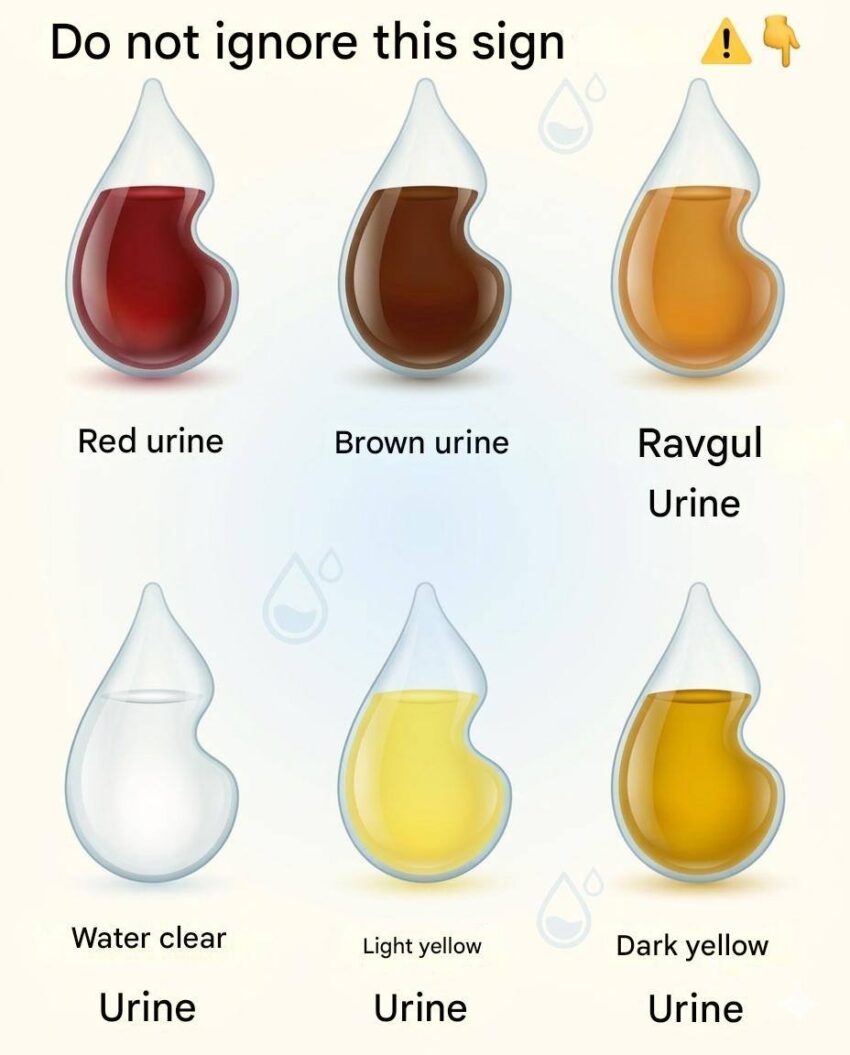
Urine color can give basic clues about hydration and sometimes health, but it’s not a diagnostic tool on its own.
Common urine colors and what they usually mean:
1. Clear (very light like water)
- Very well hydrated
- Sometimes overhydration (drinking excessive water)
2. Pale yellow (straw color)
- Ideal range
- Normal, healthy hydration
3. Dark yellow / amber
- Mild to moderate dehydration
- You may need more fluids
4. Honey or brownish-yellow
- More significant dehydration
- Can also be affected by certain foods or vitamins (especially B-complex)
5. Orange
- Dehydration
- Sometimes due to medications or high vitamin intake
- Rarely, could signal liver or bile issues if persistent
6. Pink or red
- Can be from food (beets, berries)
- But can also indicate blood in urine, which needs medical evaluation if unexplained
7. Blue or green (rare)
- Usually from medications, dyes, or rare bacterial infections
Important notes:
- Vitamins (especially B vitamins) can make urine bright yellow—this is normal
- Exercise, diet, and medications can temporarily change color
- A single abnormal color isn’t usually alarming—persistent changes matter more
When to see a doctor:
- Blood in urine (pink/red) without dietary cause
- Dark urine that doesn’t improve with hydration
- Pain, burning, fever, or back pain with changes in urine
- Foamy urine consistently (possible kidney issue)
Bottom line:
Urine color is mainly a hydration indicator, not a full health test—but persistent unusual changes can be a useful early warning sign.
If you want, I can also explain what urine smell or frequency changes might mean.
