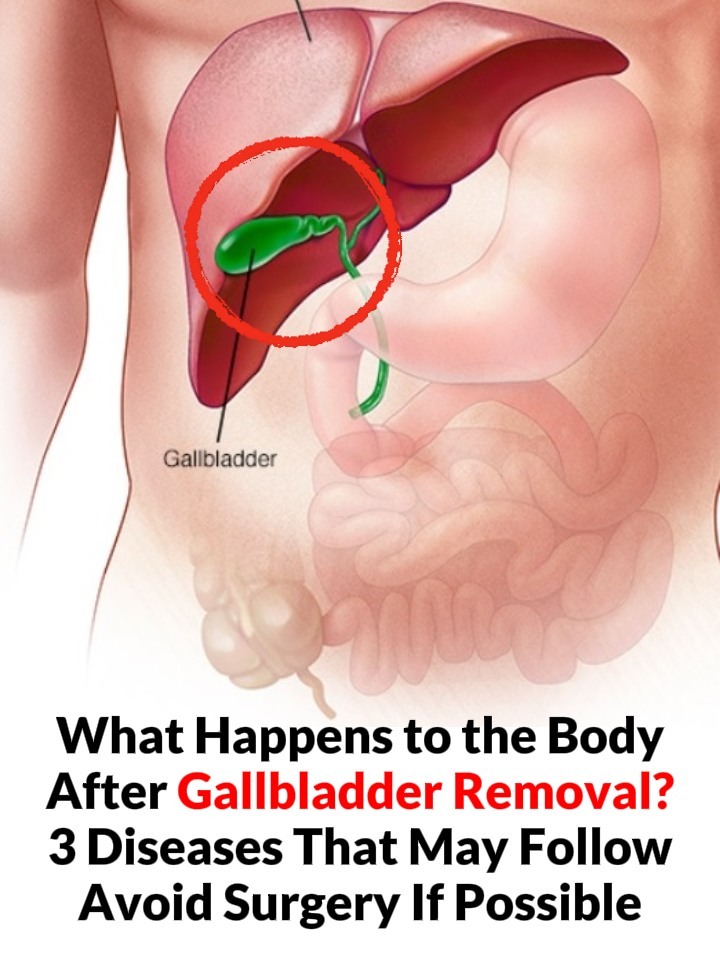
That headline mixes a real medical topic with an oversimplified and misleading conclusion.
🧠 First, the truth in one line:
Gallbladder removal (Cholecystectomy) is generally safe, and most people live completely normal lives afterward. There is no strong evidence that it “causes 3 diseases” in a predictable way or that surgery should be avoided if medically needed.
🟢 What actually happens after gallbladder removal
Your gallbladder’s job is to store bile, which helps digest fats. After removal:
- Bile flows directly from the liver into the small intestine
- Digestion continues, but in a more continuous (less “stored and released”) way
- Most people adapt within weeks to months
⚠️ Possible effects some people notice
These are real but usually mild or manageable:
1. Digestive changes
- Loose stools or diarrhea (especially after fatty meals)
- Bloating or urgency after eating
2. Fat intolerance (temporary)
- Greasy or heavy meals may cause discomfort early on
3. Bile reflux (less common)
- Burning or irritation in the stomach in some cases
🧪 “Diseases that may follow” — what the evidence actually says
Some studies have looked at associations, but causation is not clear. Here’s the reality behind common claims:
1. “Post-cholecystectomy diarrhea”
✔ Real condition in a small percentage of people
❌ Usually not permanent or severe
✔ Often improves with diet changes or medication
2. “Bile reflux gastritis”
✔ Can occur in some cases
❌ Not common and not unique to gallbladder removal
✔ Also seen in people who never had surgery
3. “Increased colon or metabolic disease risk”
❌ This is where many online claims exaggerate
- Some studies show associations, but not proven cause-effect
- Many factors (diet, obesity, genetics) confound the data
- No guideline says gallbladder removal directly causes major chronic diseases
🧠 The key medical reality
Gallbladder removal is recommended when necessary because untreated gallstones or infection can cause:
- Severe pain
- Gallbladder inflammation
- Pancreatitis (can be dangerous)
- Bile duct blockage
So avoiding surgery when it’s medically indicated can be far riskier than the procedure itself.
🚨 When surgery is actually needed
Doctors typically recommend it for:
- Repeated gallstone attacks
- Infection or inflammation
- Blocked bile ducts
- Pancreatitis related to gallstones
🟢 Bottom line
- Cholecystectomy is one of the most common and safe surgeries worldwide
- Most people have no long-term serious complications
- “3 diseases after surgery” claims are mostly exaggerated or misinterpreted research
- Surgery is usually recommended because the risks of not treating gallbladder disease are higher
If you want, I can also explain what diet actually helps after gallbladder removal or who is most likely to have digestive symptoms afterward.
