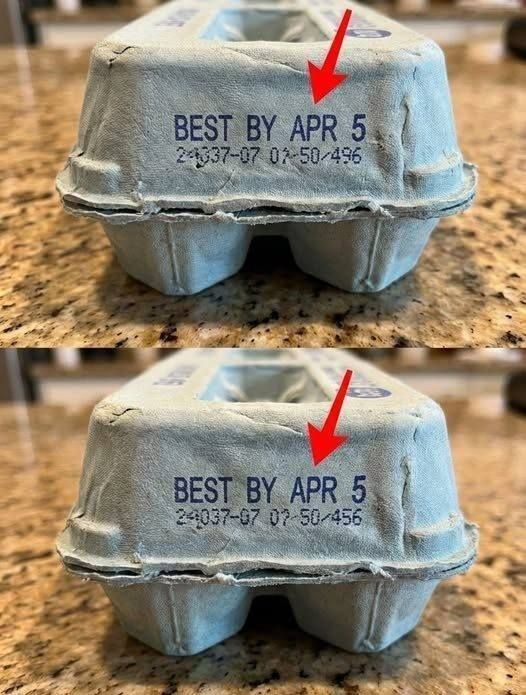
What the Numbers on Your Egg Carton Really Mean — And Why Ignoring Them Could Make You Sick
Many people buy eggs without paying attention to the numbers printed on the carton. However, these codes provide important information about freshness, safety, and how the eggs were handled. Understanding them can help you avoid eating spoiled eggs and reduce the risk of foodborne illness.
1. The Julian Date (Three-Digit Number)
On most egg cartons, you’ll see a three-digit number ranging from 001 to 365. This is called the Julian date, and it indicates the day the eggs were packed.
Examples:
- 001 = January 1
- 100 = April 10
- 365 = December 31
The closer this number is to the day you buy the eggs, the fresher they are.
2. The Plant Code
You may also see a code starting with the letter “P” followed by several numbers (for example: P-1234).
This number identifies the processing plant where the eggs were washed, graded, and packed.
If there is ever a food safety recall, this code helps trace the eggs back to their source.
3. The “Sell-By” or Expiration Date
Another date printed on the carton is the sell-by date. This tells stores how long they can display the eggs for sale.
However, eggs can often remain safe to eat for 3–5 weeks after purchase if stored properly in the refrigerator at about 4°C (40°F).
4. Why These Numbers Matter
Ignoring these numbers can increase your risk of consuming spoiled eggs, which may lead to illnesses such as Salmonella infection.
Symptoms of salmonella can include:
- Stomach cramps
- Diarrhea
- Fever
- Nausea or vomiting
Older eggs are not always dangerous, but they are more likely to harbor bacteria if not stored properly.
5. Simple Ways to Check Egg Freshness
Besides checking carton numbers, you can try these quick methods:
- The Water Test:
Place an egg in a bowl of water.- Fresh eggs sink and lie flat.
- Older eggs stand upright or float.
- Smell Test:
A spoiled egg will have a strong sulfur or rotten odor when cracked open.
Final Thought
The numbers on your egg carton are more than random codes. They provide essential information about freshness, traceability, and safety. Taking a few seconds to check them can help ensure you’re eating eggs that are both fresh and safe for your family.
