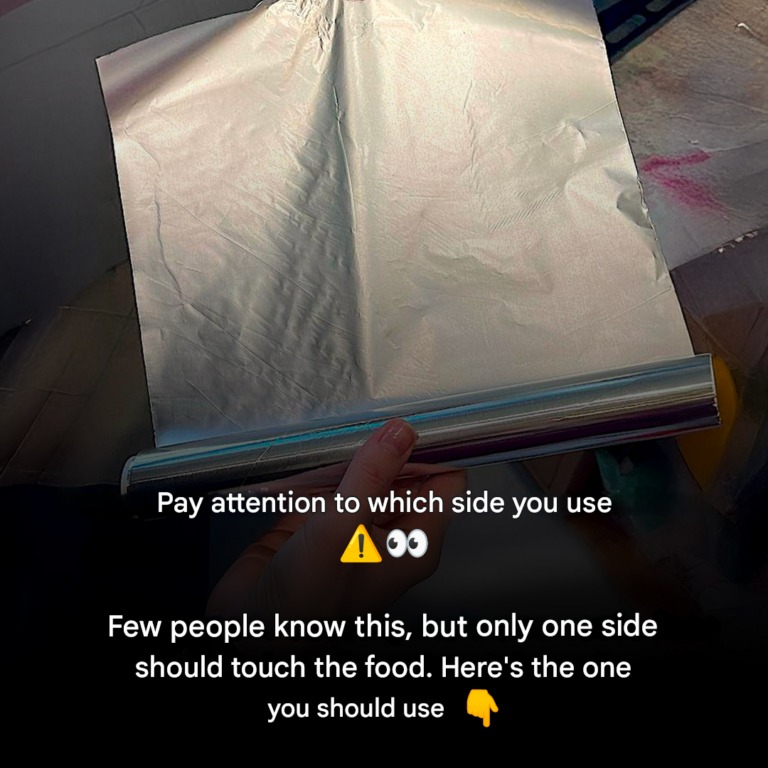
Here’s the full explanation about which side of aluminum foil to use for cooking:
1. Why Aluminum Foil Has Two Sides
- Aluminum foil is made by rolling two sheets together.
- The side that touches the rollers becomes shiny, while the other side becomes matte.
- This difference is purely cosmetic—the thickness, composition, and safety are identical.
2. Does It Matter for Cooking?
- Short answer: No.
- Both sides reflect heat almost the same way, so it doesn’t affect cooking.
- Shiny vs matte does not impact taste, safety, or cooking time.
3. Situations Where the Side Might Matter
- Non-stick foil:
- One side is coated to prevent sticking.
- Food should touch the non-stick side, otherwise it’s irrelevant.
- Broiling or heat reflection:
- Some sources suggest the shiny side reflects heat slightly better, while matte absorbs slightly more.
- The effect is negligible in regular cooking.
4. Practical Advice
- For baking, roasting, or storing food, use either side—it makes no difference.
- Only pay attention if using non-stick foil.
- Avoid cooking acidic foods (like tomatoes, vinegar, or citrus) directly on aluminum for long periods—they can react with the metal slightly.
💡 Summary:
For everyday cooking, it doesn’t matter whether you use the shiny or matte side of aluminum foil. Use whichever side is convenient, except for non-stick foil, where the coated side should touch the food.
I can also make a simple visual diagram showing shiny vs matte foil and when it matters, so it’s easy to remember in the kitchen.
Do you want me to make that diagram?
