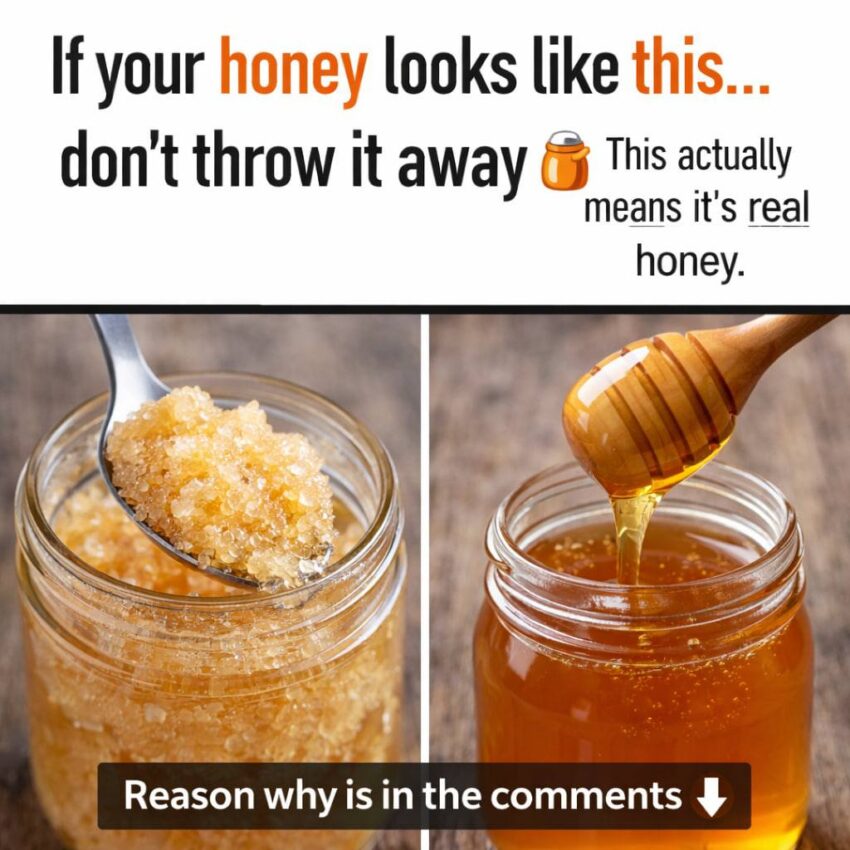
Honey crystallization is a completely natural process, and it’s actually a sign of quality, not spoilage. Here’s the full explanation:
Why Honey Crystallizes
- High Sugar Content
- Honey is mostly glucose and fructose.
- Glucose tends to separate from water over time and forms tiny crystals, while fructose remains liquid.
- Natural Variation
- The type of flower the nectar comes from affects crystallization.
- Honey with higher glucose (like clover honey) crystallizes faster than honey with more fructose (like acacia honey).
- Temperature Matters
- Honey crystallizes faster at cooler temperatures (below 50°F / 10°C).
- Storing it in a warmer spot slows the process.
Why Crystallization Is Actually Good
- Indicator of Pure Honey
- Pure, raw honey crystallizes naturally.
- Processed or heavily filtered honey often stays liquid longer due to additives or heating.
- Better for Cooking and Spreading
- Crystallized honey is thicker and easier to spread on toast or pancakes.
- Retains Nutrients
- Crystallization doesn’t reduce antioxidants, enzymes, or vitamins in honey.
How to Return Honey to Liquid (If You Prefer)
- Warm water bath: Place the jar in warm (not boiling) water and stir until smooth.
- Avoid microwaving directly, which can destroy nutrients.
💡 Bottom line:
Crystallization is natural, harmless, and even a sign of quality honey. It doesn’t mean the honey is bad—if anything, it indicates it’s raw and unprocessed, with all its natural benefits intact.
I can also share a trick to keep honey from crystallizing for months while preserving its nutrients, if you want.
