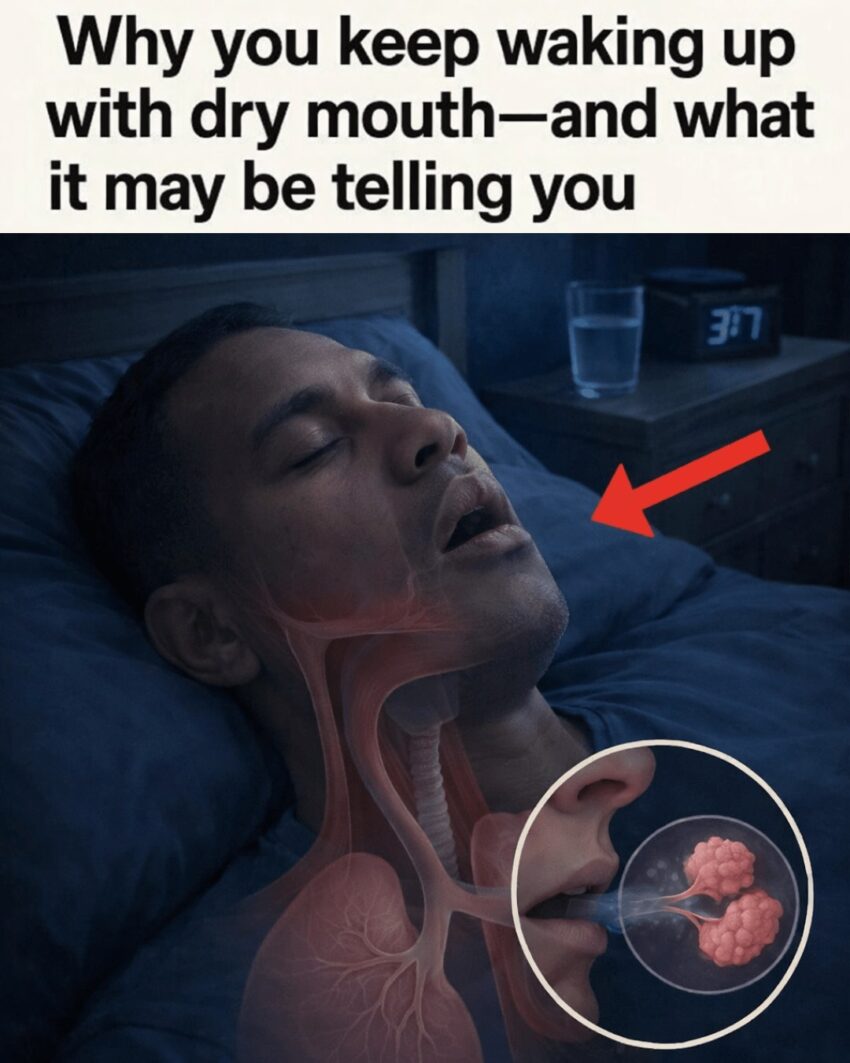
Waking up with a dry mouth is usually a sign that your mouth didn’t stay properly moist overnight. That can happen for a few simple reasons—but sometimes it also points to an underlying issue worth paying attention to.
Common reasons this happens
1) Mouth breathing during sleep
This is the most common cause. If you sleep with your mouth open, airflow dries out saliva quickly. It often happens with:
- Nasal congestion (cold, allergies, sinus issues)
- Deviated nasal septum
- Habitual mouth breathing
2) Dehydration
If you didn’t drink enough water the day before, or you lost fluids (heat, sweating, caffeine, alcohol), your body produces less saliva at night.
3) Sleep apnea or snoring
People who snore or have obstructed breathing often breathe through the mouth. Sleep apnea in particular can strongly dry out the mouth and throat overnight.
4) Medications
Many common medicines reduce saliva, including:
- Antihistamines (allergy meds)
- Antidepressants
- Blood pressure medications
- Decongestants
5) Alcohol, caffeine, or smoking
- Alcohol reduces saliva production and worsens mouth breathing
- Smoking irritates and dries oral tissues
- Caffeine can contribute to mild dehydration
6) Salivary gland issues or medical conditions
Less commonly, persistent dry mouth can be linked to:
- Diabetes
- Autoimmune conditions (like Sjögren’s syndrome)
- Salivary gland dysfunction
What it may be telling you
Occasional dry mouth is usually harmless. But if it’s frequent, your body may be signaling:
- You’re not breathing well through your nose at night
- Your sleep quality may be disrupted (especially if snoring is present)
- You may be dehydrated or using a medication that affects saliva
- Less commonly, there could be an underlying medical condition affecting saliva production
When to pay closer attention
Consider getting it checked if you also have:
- Loud snoring or gasping during sleep
- Daytime sleepiness or fatigue
- Constant thirst
- Trouble swallowing or speaking due to dryness
- Dry eyes along with dry mouth
Simple things that often help
- Drink water earlier in the day and keep a glass nearby at night
- Treat nasal congestion (saline spray, allergy management)
- Avoid alcohol close to bedtime
- Use a humidifier in your room
- Try nasal breathing support (if congestion is the issue)
- Chew sugar-free gum during the day to stimulate saliva
If you want, tell me whether you snore, wake up tired, or have nasal blockage—I can help narrow down the most likely cause for your situation.
