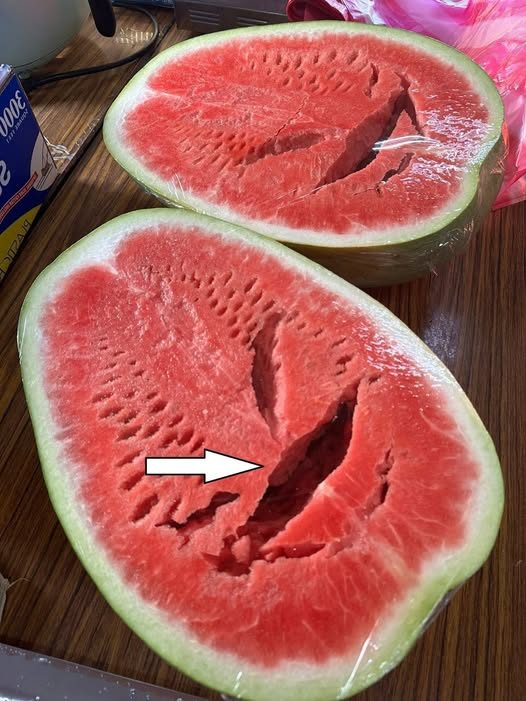
That warning is another example of an overblown internet claim. Seeing cracks inside a watermelon doesn’t automatically mean it’s dangerous to eat.
Those internal cracks—sometimes called “hollow heart”—usually happen during growth. It’s often caused by:
- Uneven pollination
- Rapid growth due to weather changes
- Natural variations in how the fruit develops
What it actually means:
- The texture might be a bit dry or less crisp
- It may not taste as sweet as a perfect melon
- But it’s generally safe to eat
When you shouldn’t eat it:
Watch for real spoilage signs instead:
- Sour or fermented smell
- Slimy or mushy flesh
- Dark, discolored patches
- Fizzy sensation (a sign of fermentation)
If none of those are present, cracked watermelon is just a cosmetic/texture issue—not a health risk.
So no need to panic or throw it away just because of cracks—just use your senses to judge freshness.
