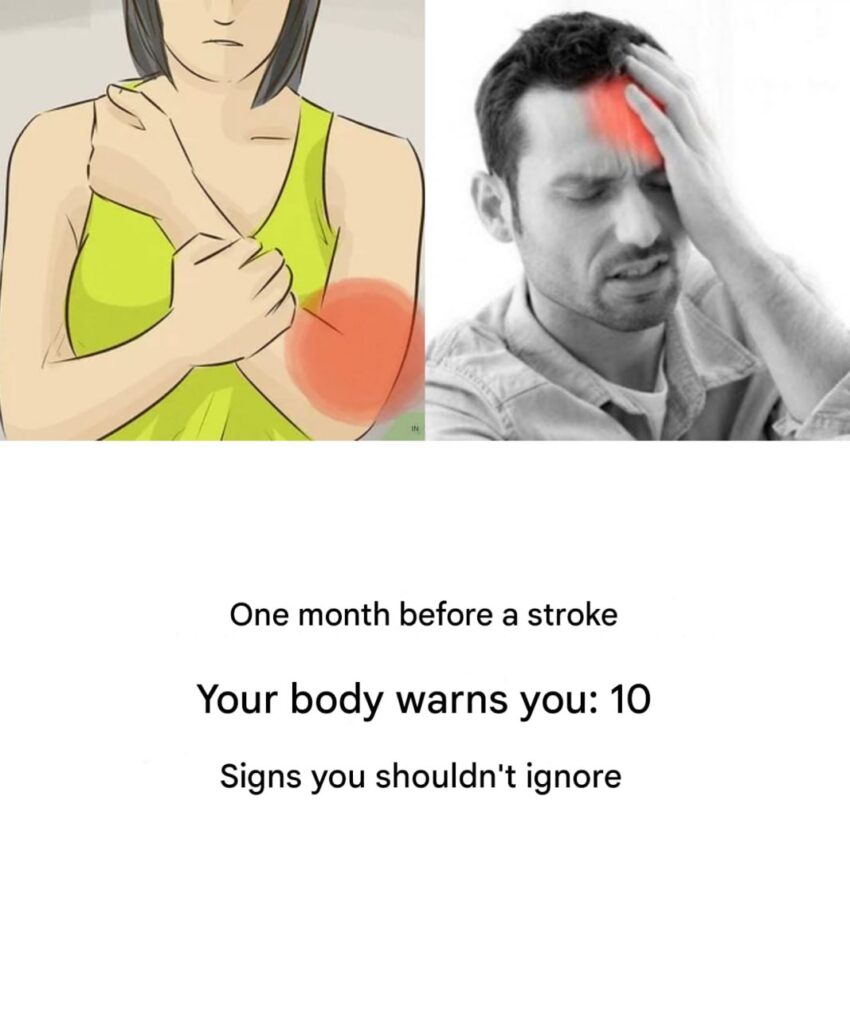
That headline is a bit misleading. The idea that your body gives a clear “one month warning” before a stroke isn’t medically accurate. However, there are warning signs—some happen suddenly (true emergencies), while others can appear earlier as risk indicators or mini-events.
Here’s what actually matters:
🚨 Immediate stroke warning signs (act FAST)
These come on suddenly and require emergency care right away:
- Face drooping (one side numb or uneven)
- Arm weakness (can’t raise one arm properly)
- Speech difficulty (slurred or hard to understand)
- Time to call emergency services
Other sudden symptoms:
- Sudden confusion
- Trouble seeing in one or both eyes
- Sudden dizziness or loss of balance
- Severe headache with no clear cause
These are classic signs of a stroke, often linked to conditions like Ischemic stroke or Hemorrhagic stroke.
⚠️ Early warning signs (days to weeks before)
Some people experience symptoms in advance, often due to a mini-stroke, known as a Transient ischemic attack:
- Temporary numbness or weakness (especially on one side)
- Brief vision loss or double vision
- Short episodes of slurred speech
- Sudden dizziness that goes away
These can last minutes to hours and then disappear—but they are a major red flag.
📊 Ongoing risk factors your body may “signal”
These aren’t direct warnings, but they increase stroke risk:
- High blood pressure (biggest risk factor)
- Diabetes
- High cholesterol
- Smoking
- Irregular heartbeat (like Atrial fibrillation)
- Frequent severe headaches (in some cases)
⚠️ Bottom line
There’s no reliable list of “10 signs one month before a stroke.” But:
- Sudden symptoms = emergency
- Temporary symptoms = urgent medical check
- Risk factors = time to take prevention seriously
If you want, I can help you assess your personal risk or explain how to reduce your chances of stroke in practical steps.
