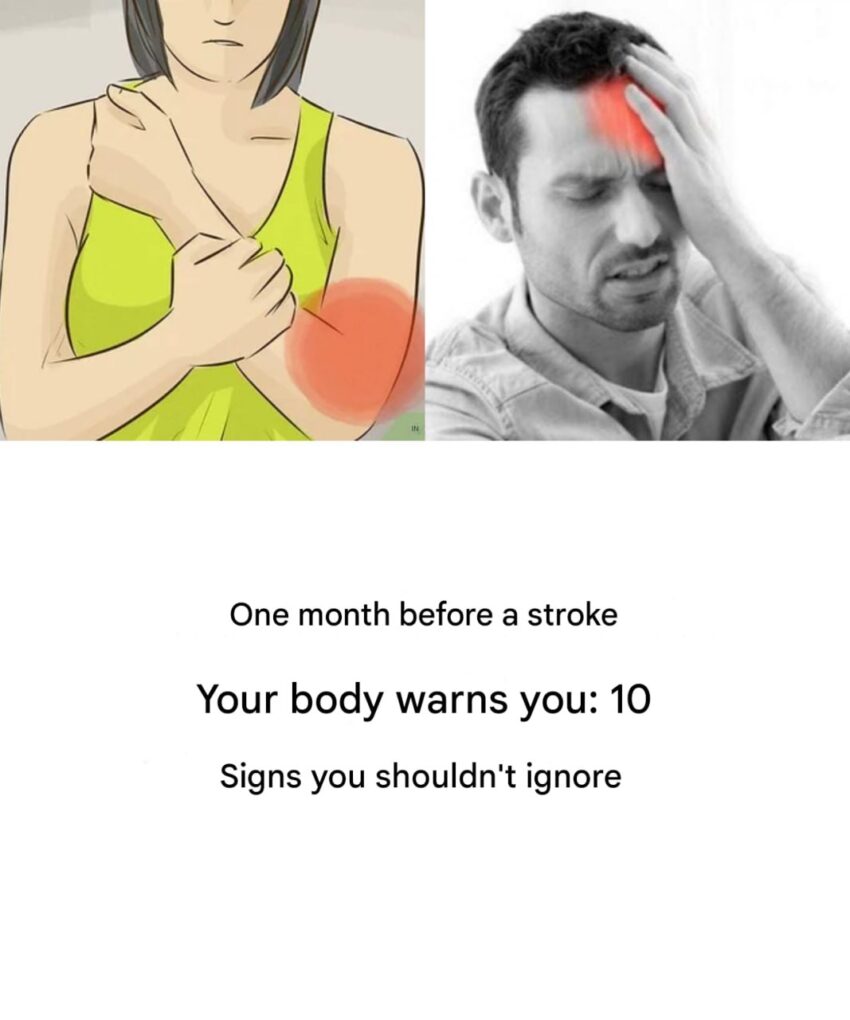
The idea that the body reliably “warns you one month before a stroke” is misleading. A stroke usually happens suddenly, and there is no guaranteed 30-day warning window.
What is true is that some people experience warning signs in the days, weeks, or even months before a stroke, often due to a temporary blockage called a TIA (transient ischemic attack) or underlying blood vessel problems.
A stroke (Stroke) happens when blood flow to part of the brain is interrupted, and early recognition is critical.
Here are 10 warning signs that should never be ignored, even if they come and go:
1. Sudden weakness or numbness (especially one side)
Face, arm, or leg weakness on one side of the body is one of the most common red flags.
2. Face drooping
One side of the face may feel weak or look uneven when smiling.
3. Slurred or strange speech
Speech may become unclear, slow, or hard to understand.
4. Sudden confusion
Difficulty understanding conversations or expressing thoughts.
5. Vision problems
Blurred vision, double vision, or loss of vision in one or both eyes.
6. Severe, unusual headache
A sudden, intense headache with no clear cause—especially if different from usual headaches.
7. Dizziness or loss of balance
Trouble walking, coordination problems, or feeling like the room is spinning.
8. Numbness or tingling
Especially if it affects one side of the body or comes on suddenly.
9. Brief episodes of stroke-like symptoms (TIA)
Symptoms that appear suddenly and then disappear within minutes or hours. This is a major warning sign that a full stroke may follow.
10. Sudden difficulty understanding or speaking
Even brief trouble forming sentences or understanding others can signal a serious issue.
Important reality check
- These symptoms do not mean a stroke will definitely happen in one month.
- But they do mean the risk may be higher, especially if they repeat or come suddenly.
- A TIA is often called a “mini-stroke,” and it is a medical emergency, not a harmless event.
When to act immediately
If any of these symptoms happen suddenly, even if they go away:
- Call emergency services right away
- Do not wait to see if it improves
If you want, I can also explain:
- how to distinguish stroke vs migraine
- stroke risk factors (like blood pressure, diabetes)
- or the FAST method for quick recognition in emergencies
