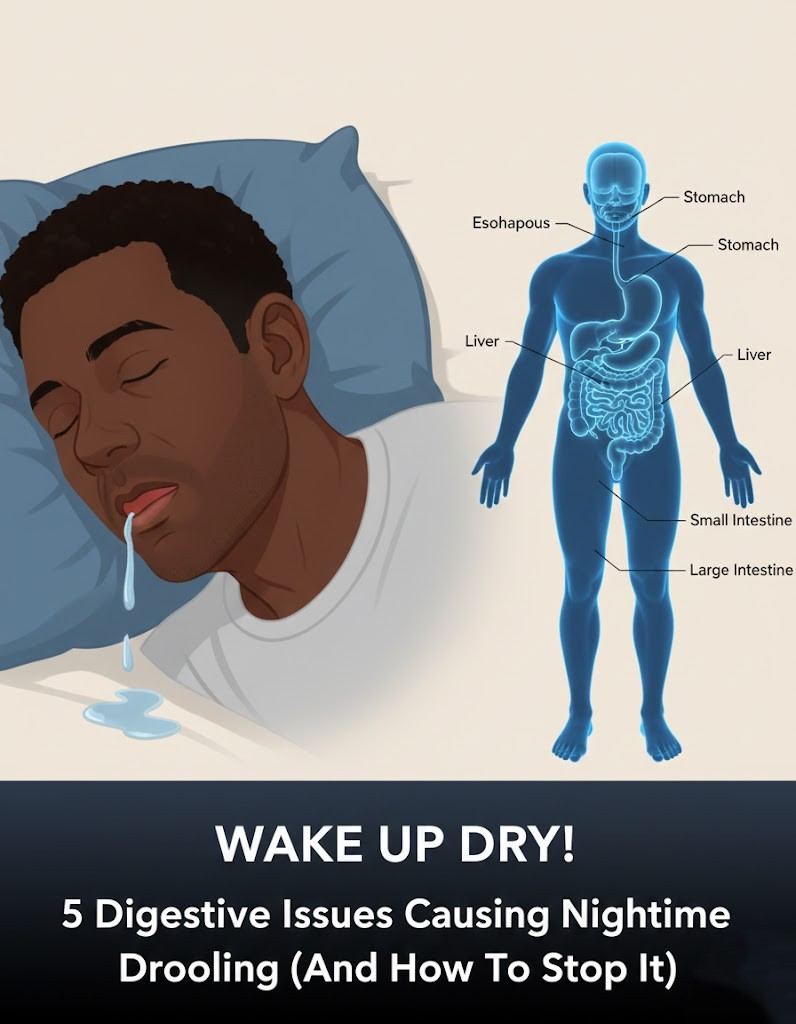
Headlines like “your drool problem is a warning sign of terrifying diseases” are designed to scare you. The reality is more balanced:
👉 Drooling (especially during sleep) is very common and usually harmless.
👉 But in some cases, it can be linked to underlying conditions — especially if it’s new, severe, or happens during the day.
What drooling usually means (most common causes)
Before worrying about disease, consider these normal reasons:
- Sleeping on your side or stomach
- Deep sleep (mouth relaxes and opens)
- Nasal congestion (you breathe through your mouth)
- Acid reflux or minor throat irritation
These are far more common than any serious illness.
6 conditions sometimes linked to excessive drooling
1. Sinus or nasal blockage
Conditions like colds, allergies, or a deviated septum can force mouth breathing → leading to drooling.
2. Acid reflux (GERD)
Gastroesophageal reflux disease
Can increase saliva production (“water brash”), especially at night.
3. Sleep disorders
Sleep apnea
- Mouth breathing during sleep
- Poor airway control
- Often comes with snoring, choking, or daytime fatigue
4. Neurological conditions
Drooling can happen if the nerves or muscles controlling swallowing are affected, such as in:
- Parkinson’s disease
- Stroke
This is usually accompanied by other clear symptoms (tremor, weakness, speech changes).
5. Infections or throat problems
- Tonsillitis
- Mouth infections
- Severe sore throat
These can make swallowing painful, so saliva builds up.
6. Medication side effects
Some medicines increase saliva or affect swallowing, including:
- Certain antipsychotics
- Sedatives
- Some neurological drugs
When drooling is actually a warning sign
You should pay attention if it is:
- New or suddenly worse
- Happens while awake (not just during sleep)
- Comes with:
- Difficulty swallowing
- Slurred speech
- Facial weakness
- Severe snoring or choking at night
- Unexplained weight loss or fatigue
These situations may need medical evaluation.
What doctors want you to know
- Drooling itself is not a disease
- It’s usually related to sleep position or breathing
- Serious causes are much less common and rarely appear alone
Simple things that can help
- Sleep on your back with head slightly elevated
- Treat nasal congestion (steam, saline rinse)
- Stay hydrated
- Avoid heavy meals before bed (helps reflux)
Bottom line
The viral claim is exaggerated.
Most drooling during sleep is normal and harmless, not a hidden sign of “terrifying diseases.”
But if it’s persistent, worsening, or comes with other symptoms, it’s worth getting checked — not out of fear, but for proper evaluation.
If you want, I can help you figure out what your specific drooling pattern might indicate based on your symptoms.
