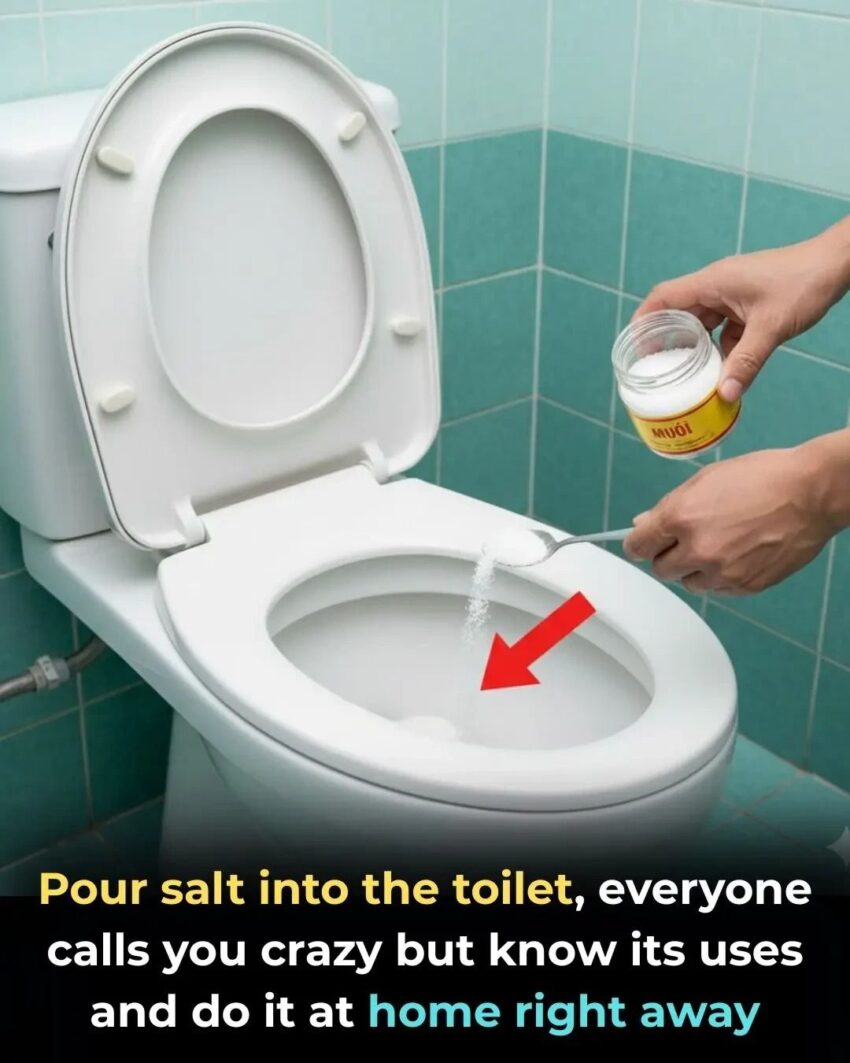
This kind of claim is a classic “viral hack” that sounds dramatic but is mostly exaggerated.
What actually happens if you pour salt into a toilet?
Salt (sodium chloride) is not harmful in small household amounts, but it also isn’t a miracle solution for plumbing problems. Here’s what it can and can’t do:
Possible minor uses:
- Light deodorizing: Salt can slightly reduce odors when combined with hot water and left for a while.
- Mild scrubbing effect: Its crystals can act as a very gentle abrasive if you scrub the bowl.
- Occasional drain support (limited): In some home remedies, salt is combined with hot water (or baking soda) to help loosen light grime.
What it does NOT do:
- It will not “deep clean” your toilet by itself.
- It will not reliably unclog blocked pipes.
- It does not disinfect like proper toilet cleaners.
- It is not a substitute for proper plumbing maintenance.
Important caution
Regularly dumping large amounts of salt isn’t a great idea. Over time, salt can contribute to corrosion of metal parts inside older plumbing systems and isn’t ideal for septic balance in excess.
Better, safer approach
If your goal is cleaning or deodorizing, more effective and well-known options are:
- Hot water + dish soap (for mild buildup)
- Baking soda + vinegar (for fizzing lift and odor reduction)
- Standard toilet cleaner (for proper disinfection)
Bottom line
Pouring salt into a toilet isn’t dangerous in small amounts, but it’s also not the “life-changing hack” it’s often made out to be. It’s more of a minor add-on at best, not something you need to rush home and try as a solution on its own.
