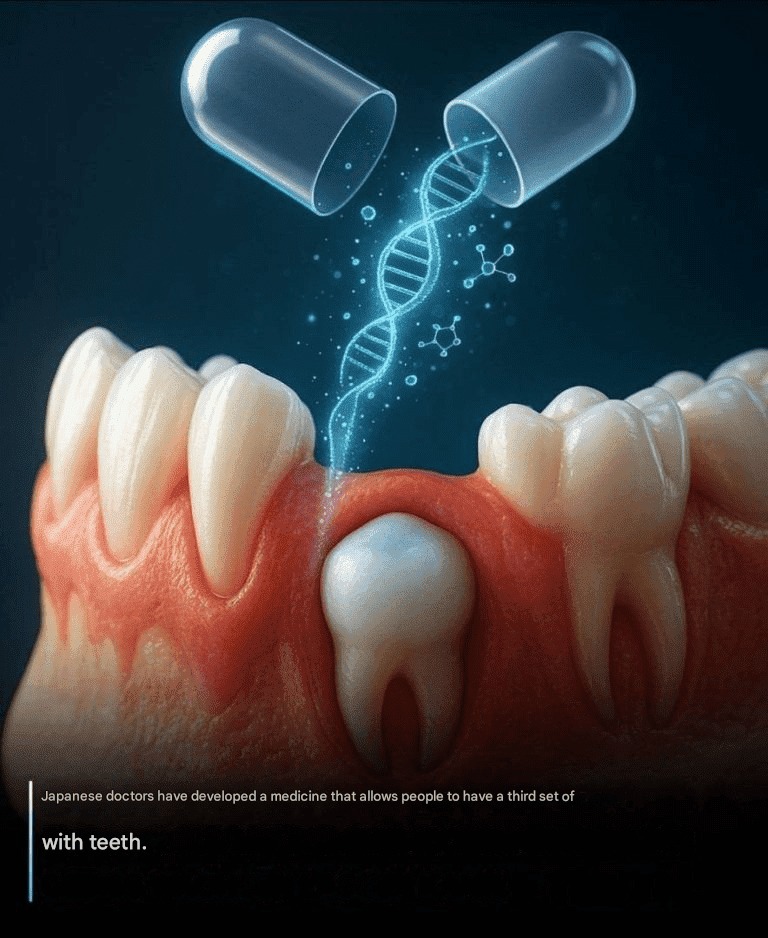
Yes — scientists are now much closer than ever to allowing people to regrow lost teeth naturally, thanks to exciting research breakthroughs in dental regeneration. (Popular Mechanics)
🦷 1. Medicine That Could Regrow Human Teeth
Researchers in Japan are testing a drug that targets a gene called USAG‑1, which normally suppresses tooth growth. By blocking this gene, they’ve been able to trigger growth of new teeth in animal studies and are now conducting human clinical trials.
If successful, the treatment might be ready for widespread use — possibly by the early 2030s — to help people regenerate lost teeth instead of relying on dentures or implants. (Popular Mechanics)
🦷 2. Lab Efforts Toward Tooth Regeneration
Separate research teams are developing biomaterials and scaffolds that allow cells to form tooth‑like structures in the lab. Although still experimental, this could lead to biologically grown tooth replacements in the future, rather than artificial implants. (The Times of India)
🦷 3. Regenerating Tooth Enamel
Scientists have also created a protein‑based gel that can repair and regenerate damaged enamel — the hard outer layer of teeth — by mimicking how enamel forms naturally. This doesn’t grow a whole tooth, but it could heal decay and enamel loss, a huge shift from current fillings and treatments. (SciTechDaily)
🦷 4. A Big Shift in Dental Care
Taken together, these breakthroughs suggest a future where:
- Missing teeth could be grown, not replaced
- Decay could be reversed instead of filled
- Dental care becomes far more biological and regenerative
This doesn’t mean regrowing teeth is available today, but the science is progressing fast, and many experts think we could see real, clinical tooth regrowth therapies within the next decade — around 2030 or so. (Popular Mechanics)
💡 Bottom Line: Traditional tooth loss from injury, decay, or aging has long been considered irreversible. But thanks to new medicines targeting growth genes and innovative regenerative materials, the idea of getting back lost teeth naturally is moving from science fiction to real scientific possibility. (Popular Mechanics)
