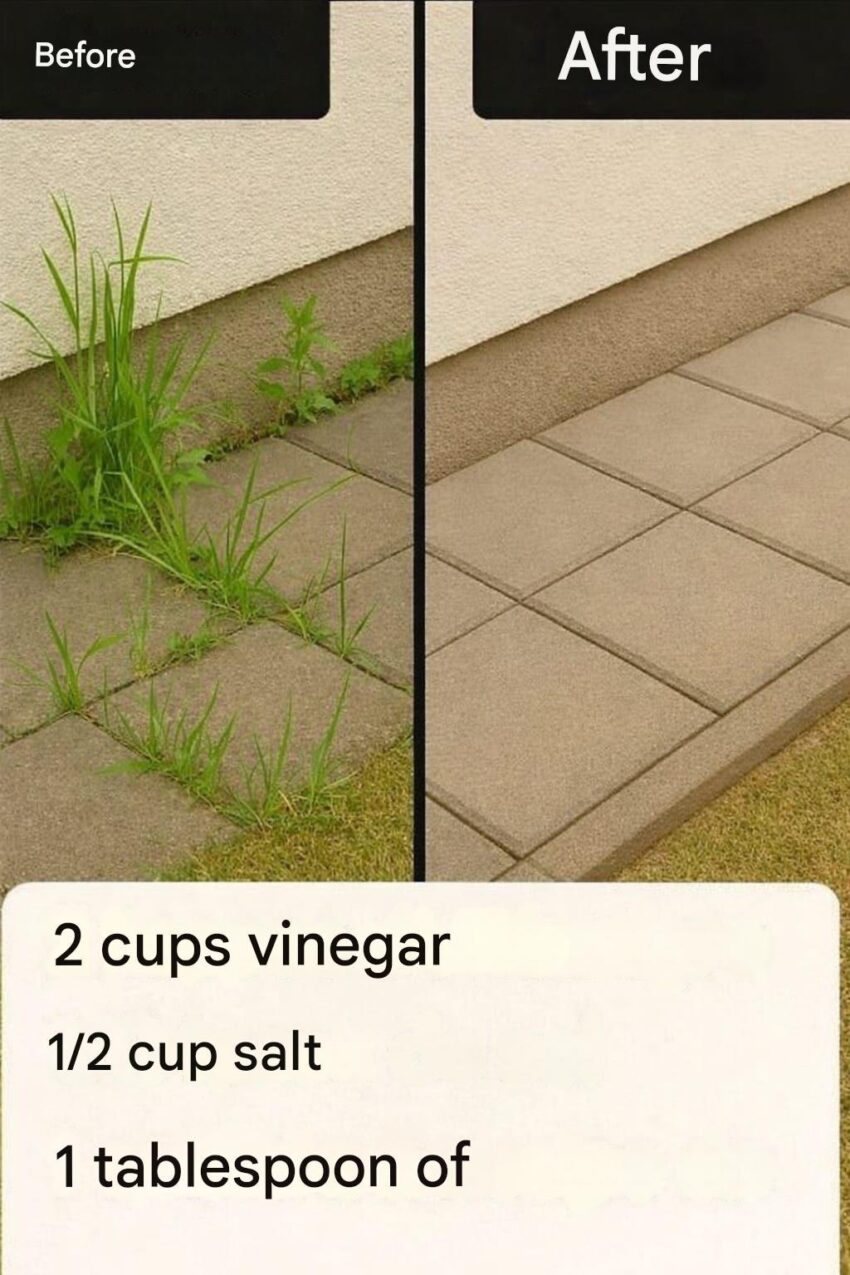
If your goal is to kill weeds, you can make a simple homemade herbicide, but it’s important to be realistic: most DIY options are non-selective (they kill any plant they touch) and are best for small, shallow weeds—not deep-rooted or invasive plants.
Also, they don’t always work as strongly as commercial herbicides.
🌿 Simple homemade herbicide (most common recipe)
🧪 1. Vinegar + salt + dish soap spray
Ingredients:
- 1 liter white vinegar (5–10% acidity works best)
- 2–3 tablespoons salt
- 1 teaspoon liquid dish soap
How it works:
- Vinegar burns plant leaves (acidic)
- Salt dehydrates the plant
- Soap helps it stick to leaves
How to use:
- Mix and spray directly on weeds
- Apply on a hot, sunny day
- Avoid rain for 24 hours
⚠️ Important warnings:
- Kills any plant it touches (including grass and flowers)
- Salt can damage soil for a long time, making it hard for plants to grow again
- Best for driveways, cracks, gravel areas—not gardens
🌱 2. Boiling water (very safe method)
- Pour boiling water directly on weeds
- Works best on cracks in pavements or small weeds
👉 Safe for environment but may need repeated use
🛢️ 3. Vinegar-only spray (milder option)
- Use strong vinegar (horticultural vinegar works best if available)
- Spray directly on leaves
👉 Less soil damage than salt mixture
🌞 Why these work better in sun
- Heat + acidity speeds up leaf burn and dehydration
- Rain reduces effectiveness
🚫 What NOT to expect
- Won’t reliably kill deep-rooted weeds (like dandelions)
- Won’t replace professional herbicides for large infestations
- Won’t permanently sterilize soil in a controlled way (salt just damages it unpredictably)
🧠 Bottom line
Homemade herbicides can be useful for small, visible weeds in non-garden areas, but they are:
- Non-selective
- Short-term solutions
- Potentially harmful to soil if overused
If you want, I can also tell you:
👉 safest weed control methods for gardens (no soil damage)
👉 or natural ways to prevent weeds from growing in the first place
