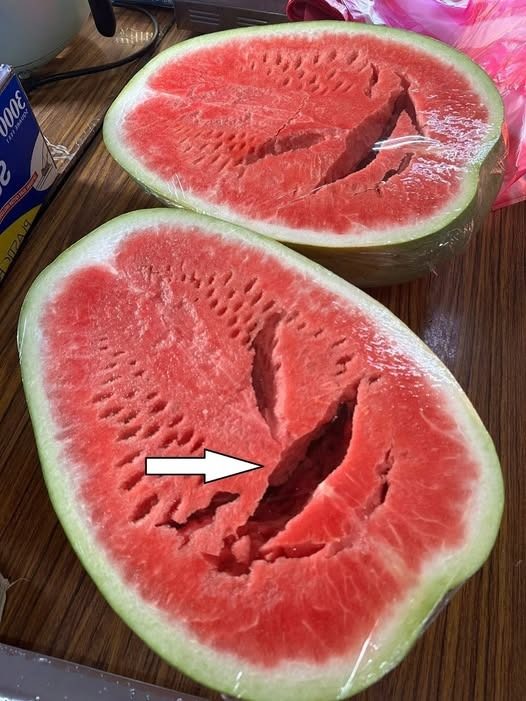
That headline is another fear-based “health warning” that mixes a small real phenomenon with exaggerated danger.
🍉 What cracked patterns in watermelon usually mean
When you cut open a watermelon and see internal cracks, hollow spots, or fibrous splits, it is most often due to normal growing conditions:
- Rapid growth after heavy watering or rain
- Uneven ripening inside the fruit
- Natural variation in sugar distribution
- Certain varieties are more prone to “hollow heart” (internal cracking)
This is generally a condition called hollow heart, and it is common in agriculture.
❌ Does it mean the watermelon is dangerous?
In most cases: no.
If the fruit:
- Smells normal
- Isn’t slimy or fermented
- Has no mold
- Tastes normal
…it is usually safe to eat.
⚠️ When you should avoid it
Stop eating it if you notice:
- Sour or alcoholic smell (fermentation)
- Mushy, watery breakdown
- Visible mold
- Strange discoloration or slime
These signs indicate spoilage—not just cracking.
🧠 Why these posts go viral
They often:
- Take a harmless agricultural issue (like hollow heart)
- Rebrand it as a “danger signal”
- Encourage panic without context
✔️ Bottom line
Cracks inside a watermelon are usually a quality issue, not a safety warning. The fruit is often still perfectly fine to eat if it otherwise looks and smells normal.
If you want, you can describe what yours looked like (or share details), and I’ll tell you whether it’s normal or actually spoiled.
